
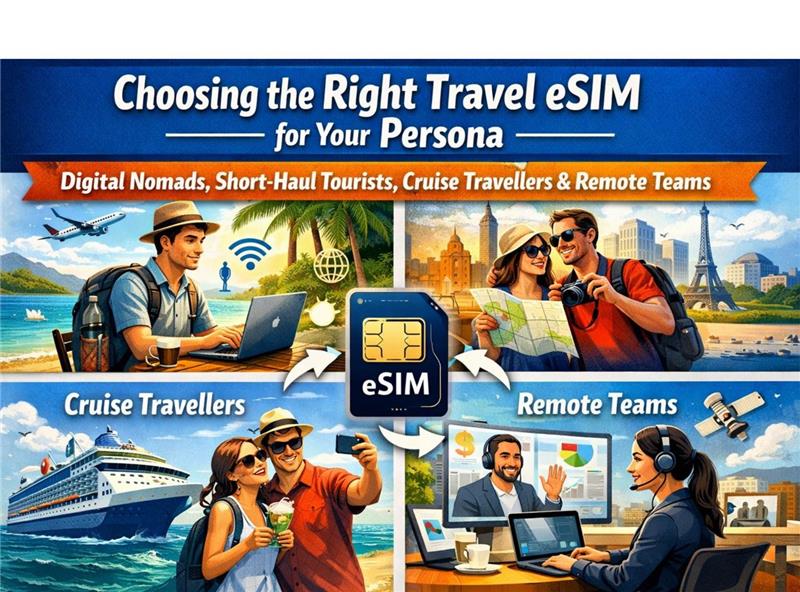
Choosing a Travel eSIM is no longer a one-size-fits-all decision. As roaming costs rise and mobile connectivity becomes a necessity rather than a luxury, travellers of all kinds rely on eSIM technology to stay online. The challenge is that not every travel profile has the same needs. A digital nomad working from multiple countries, a short-haul tourist taking a quick city break, a cruise traveller navigating international waters and a remote team working across borders all require different levels of coverage, reliability, and data flexibility.
This guide explores how to choose the best Travel eSIM based on your travel persona, what features matter most and how platforms like Hubbing Ecom support diverse connectivity requirements for global travellers. The goal is to empower you with practical, unbiased information so you can make the right decision before your next journey.
What You Need to Know Before Choosing Any Travel eSIM
Before diving into traveller-specific recommendations, it is important to understand the factors that impact eSIM performance. Whether selecting a regional package or exploring All eSIM options, these considerations will guide your choice.
Device Compatibility
Not all smartphones, tablets and laptops support eSIM technology. Modern flagship devices typically support eSIM, but older models may require physical SIM cards. Always check the manufacturer’s specifications before buying them.
Network Quality and Partnerships
A Travel eSIM relies on agreements with local carriers. The better the partnerships, the more stable your connection. Network speed can vary significantly between rural and urban areas, so coverage maps are essential.
Data Volume and Validity
Travellers differ in how much data they need. Some only require light browsing, while others need high-volume data for streaming or remote work. Comparing short-term plans, monthly packages and unlimited-data options can help you avoid overpaying.
Security and Privacy
An eSIM provides direct access to cellular networks, which tend to be more secure than public Wi-Fi. For business travellers, security is non-negotiable.
To learn more about the brand’s approach to global connectivity, you can visit the About Us page on the Hubbing Ecom website.
Understanding the Four Main Travel Personas
Different travellers have different connectivity needs. Below are the four primary personas discussed in this guide.
Digital Nomads
Digital nomads work remotely while travelling across cities and countries. Their livelihood depends on stable, high-speed mobile and hotspot connections. Poor network performance directly impacts productivity.
Short-Haul Tourists
Short-haul tourists take weekend trips or short vacations. They need convenience above all else. A lightweight, easy-to-install Travel eSIM with moderate data is typically the best fit.
Cruise Travellers
Cruise travellers face unique challenges. Traditional roaming plans rarely function at sea, and maritime networks can be expensive. They often require hybrid solutions that offer connectivity both offshore and onshore.
Remote Teams
Remote teams operate across multiple regions, requiring consistent connectivity for collaboration tools and communication apps. Centralized management and cost transparency are essential.
Best Travel eSIM Options by Persona
Travel eSIM for Digital Nomads
Digital nomads rely heavily on mobile data to conduct business. Video calls, file uploads, cloud storage, and online collaboration require stable, high-quality connections. Traditional mobile roaming plans often fall short due to limited coverage or high cost, making eSIMs a practical alternative.
What Digital Nomads Should Look For
- Global or multi-country plans
A nomad travelling across continents benefits from regional or global eSIM plans that prevent the need to switch networks frequently. - High data allowances
A plan offering 5GB to unlimited data is ideal for work purposes. Some All eSIM plans offer flexible data top-ups that suit unpredictable work demands. - Hotspot support
Many digital nomads use laptops, so tethering is essential. Before buying, confirm whether the eSIM supports hotspot usage. - Longer validity options
Monthly or 60-day plans reduce the hassle of frequent renewals.
Recommended features for nomads
- Multiple network access for redundancy
- Coverage across remote areas
- Clear data usage tracking
- Affordable long-term packages
Platforms like Hubbing Ecom offer information on different global connectivity options that digital nomads can explore through their Blog section.
Travel eSIM for Short-Haul Tourists
Short-haul tourists generally travel for leisure. Their priority is simplicity rather than long-term connectivity. A prepaid Travel eSIM that activates instantly upon arrival is the most suitable option.
What Short-Haul Tourists Need
- Instant activation
Being able to activate the eSIM by scanning a QR code makes the process hassle-free. - Low to moderate data packages
Most tourists use data for maps, social media and messaging, so 3GB to 10GB is usually sufficient. - Regional plans for nearby destinations
Tourists often hop between countries, especially in Europe or Southeast Asia. Regional plans allow them to travel without switching networks. - Good coverage in cities and airports
Since most tourists stay within urban areas, high-speed city coverage is the priority.
Why eSIMs suit tourists
- Avoids expensive airport SIM cards
- Quick setup
- No physical SIM handling
- Cost-effective for short usage
Short-haul tourists benefit significantly from All eSIM offerings, as they can compare multiple regional packages at once.
Travel eSIM for Cruise Travellers
Cruise travellers encounter the most complex connectivity landscape. Standard roaming plans do not work reliably at sea because ships use maritime networks instead of land-based mobile towers.
What Cruise Travellers Should Look For
- Hybrid land-and-sea plans
Travelers need coverage at ports and along coastlines. Some cruise-specific eSIMs switch automatically between networks depending on location. - Satellite-supported networks
While satellite connectivity is often costly, it remains necessary for deep-sea coverage. - Clear usage guidelines
Maritime roaming charges can escalate quickly. Cruise travellers should choose eSIMs that clearly define rates and coverage areas. - Short-term validity
Cruise holidays are usually limited to one or two weeks. A Travel eSIM with 7- or 14-day validity is ideal.
Ideal features for cruise travellers
- Automatic switching between maritime and local networks
- Predictable pricing
- Compatibility with onboard Wi-Fi calling
- Data-efficient plans
Cruise travellers benefit from comparing All eSIM options that include coastal-region packages as well as maritime solutions.
Travel eSIM for Remote Teams
Remote teams require reliable connectivity for cross-border collaboration. Their challenges are different from individual travellers, as team-wide usage needs oversight and predictability.
What Remote Teams Should Focus On
- Centralized data management
Managers require dashboards to track data usage, expenses, and plan validity across multiple team members. - Global coverage
Team members often work from different countries. A Travel eSIM with broad international coverage avoids fragmentation. - Security for business communications
Encrypted network access helps protect company data. - Flexible billing options
Companies may require monthly billing or bulk purchases instead of individual team payments.
Advantages for remote teams
- Reduced international roaming costs
- Consistent access to communication tools
- Improved productivity for distributed teams
Brands like Hubbing Ecom highlight how modern eSIM solutions can support remote operations, which you can explore further through their Blog page.
Comparison Table: Travel eSIM Requirements by Persona
| Persona | Data Needs | Coverage Type | Validity | Key Features |
| Digital Nomads | High (10GB to unlimited) | Regional or global | 30–60 days | Hotspot support, multi-network redundancy |
| Short-Haul Tourists | Moderate (3–10GB) | Single country or regional | 7–30 days | Instant activation, city coverage |
| Cruise Travellers | Low to moderate | Maritime + coastal | 7–14 days | Hybrid network switching |
| Remote Teams | Varies by role | Global | Monthly | Management dashboard, secure connectivity |
How All eSIM Plans Differ: Prepaid, Regional and Global
Whether you are a tourist or a remote worker, understanding the types of All eSIM plans available helps narrow down your choices.
Prepaid Country-Specific Plans
Ideal for travellers staying in one location.
These plans offer:
- Lower cost
- High-speed coverage
- Simple activation
Regional eSIM Plans
Cover multiple countries within a region such as:
- Europe
- Asia
- North America
Best for multi-country trips or short-hop itineraries.
Global eSIM Plans
Provide connectivity across continents.
Suitable for digital nomads and remote teams needing:
- Worldwide consistency
- Single-plan management
- Network redundancy
How Hubbing Ecom Supports Different Travel Personas
Hubbing Ecom provides resources that help travellers understand various eSIM options before purchasing. Their website provides information, insights and comparisons through sections such as:
- The About Us page, where travellers can learn about the company’s commitment to connectivity solutions
- The Blog section, featuring guides and updates on eSIM technology
- Resources that explain how All eSIM offerings work across global networks
By exploring their informational content, travellers can make better decisions based on their persona.
Conclusion
Choosing the right Travel eSIM depends on understanding your travel persona and identifying the features that matter most. Digital nomads require extensive coverage and high data limits; tourists need ease and affordability; cruise travellers need hybrid maritime connectivity, and remote teams benefit from unified management tools.
Whether comparing All eSIM plans, exploring global options or reviewing coverage levels, being informed helps ensure consistent connectivity. Platforms like Hubbing Ecom provide valuable guidance to help travellers make informed decisions before every trip. For further clarification about available options or general eSIM information, you can visit the website’s Contact Us section to learn more.
FAQs About Travel eSIMs
A Travel eSIM is a digital SIM that allows users to connect to mobile networks abroad without using a physical SIM card.
Travel eSIMs offer convenience, instant activation, and no need to switch physical SIM cards, making them ideal for frequent travellers.
No. You can keep your home SIM active for calls or verification messages while using travel data on your eSIM.
Digital nomads benefit from regional or global plans with high data allowances and hotspot support.
Yes, but you need a hybrid maritime plan or an eSIM with coastal coverage.
Remote teams use centralized dashboards and global eSIM plans to manage connectivity across countries.
You can explore informational resources on the Hubbing Ecom website to understand available options.