


Global travel has changed faster than many roaming rules, and most travelers now carry at least one eSIM‑ready phone. As a telecom professional, the goal here is to explain how global travel eSIM options really work, where they shine, and where a simple local eSIM still makes more sense. This article breaks down how global roaming works behind the scenes, compares global eSIM vs local eSIM choices in real trips, and helps you decide the best eSIM for frequent travelers, business users, and occasional tourists in plain, practical language.
What is a Global Travel eSIM?
A global travel eSIM is a prepaid data plan that works in a set of designated countries listed in your plan, typically trying to cover as many destinations as possible across different continents for your connectivity needs. It is usually data‑only and delivered digitally, so you install it on your eSIM‑compatible device without needing a physical SIM.
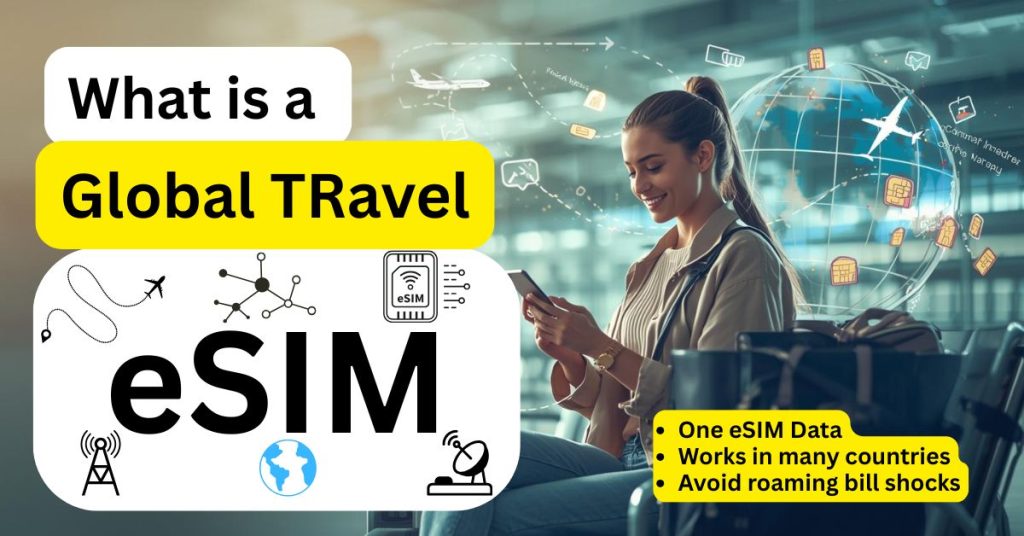
Global travel eSIM options sit alongside country plans and regional plans, so you can mix them depending on your route and budget. For many trips, the choice becomes global eSIM vs local eSIM, and you decide based on how many borders you cross and how often you travel. You can buy your next Global eSIM from us which work in more than 120 countries.
Global travel eSIM plans often support 100 to 200+ countries, though the exact list varies by provider and price. For simple trips, a country plan may feel cheaper; however, when you hop between several regions, a single global travel eSIM can save time and reduce surprises.
Because most global travel eSIM plans are data‑only, you usually keep your primary number on a physical SIM or home eSIM for calls and OTPs. In practice, you then use apps like WhatsApp or FaceTime Audio over the global travel eSIM, which keeps your messaging experience smooth while roaming.
Global travel eSIM providers typically sell plans by duration and data, such as 7, 15, or 30 days with fixed gigabytes or unlimited data with fair‑use caps. When you compare international eSIM plans, check whether the global travel eSIM includes high‑speed data everywhere or uses throttling after a limit.
What happens in the background?
Before deciding if a global eSIM is right for you, it helps to understand what happens in the network when you roam. When you switch on your phone in a foreign country, the device searches for available networks and selects one based on international roaming agreements and priorities configured in your profile.
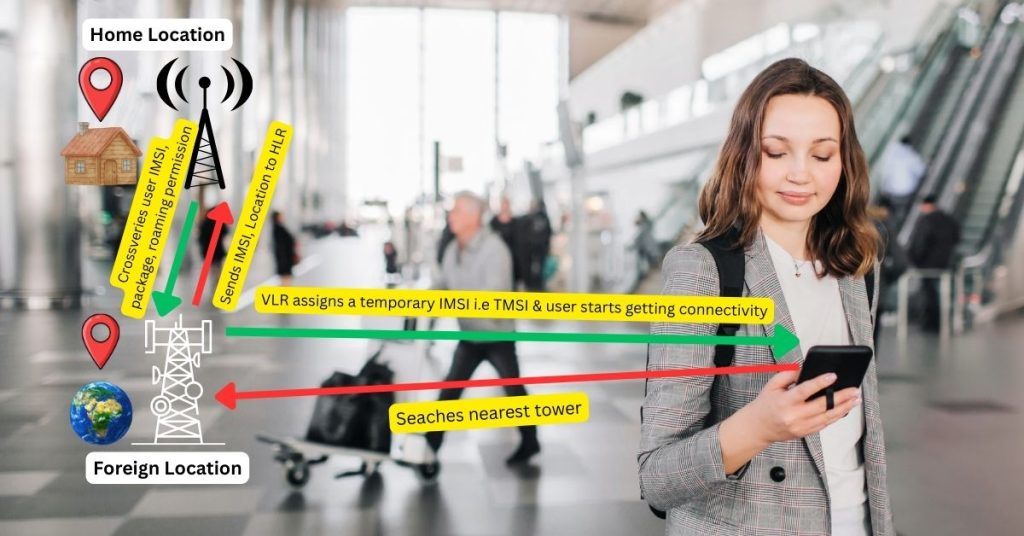
Roaming signalling between operators is mandatory for interoperability and may be carried via direct bilateral links or through transit/IPX providers, and the quality and resilience of these paths can also influence your roaming experience. Even though the user experience looks simple, there are multiple layers of signalling, authentication, and policy enforcement working continuously.
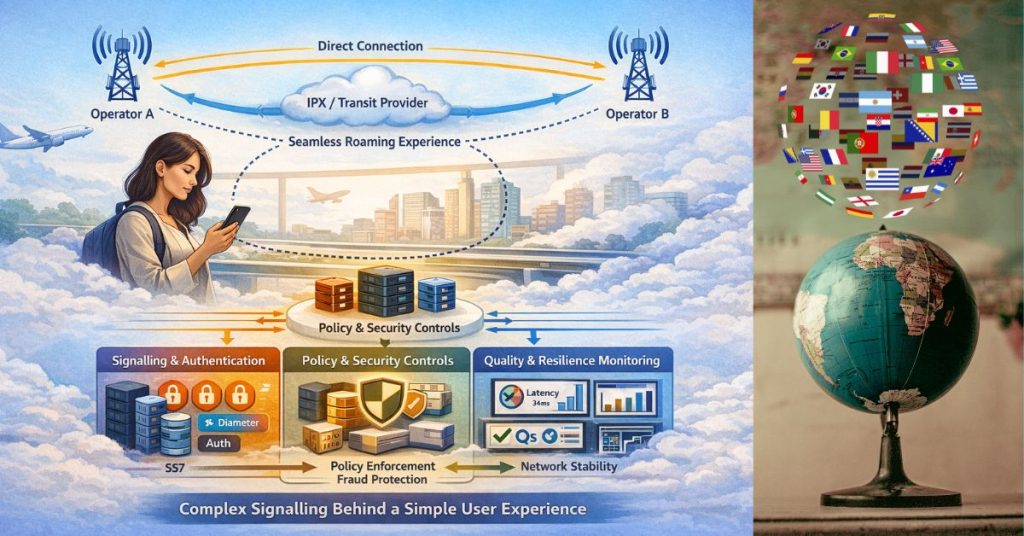
When you use a global travel eSIM instead of your home SIM, the same core roaming concepts apply, but your “home network” may be a virtual operator that buys wholesale access globally. This design lets one global travel eSIM behave like a local SIM in many countries while you still manage everything from one app.
Because international eSIM plans rely on these roaming links, any instability in signalling, IPX routes, or authentication servers can briefly break data even when coverage bars look fine. That is why experienced travelers always test data in a browser first and then rely on messengers or maps once packets clearly move.
Network and commercial realities
When you have so many variables, checks, and balances happening in the background, and it still needs to be profitable, it is not possible to have 100% seamless, very high‑speed data all the time. If the data is slow or not connecting, the reasons can be multiple, sometimes unintentional and beyond the control of operators, such as unstable signalling links, network congestion, poor radio conditions at the visited operator, deal mechanics at the wholesale level, or failures in authentication or billing systems.

Can all things be the same high quality at all places when you are roaming? It is like walking into a buffet and assuming everything will be 5‑star according to your taste—it is impossible. There are scenarios where some people start abusing the buffet by consuming the higher‑cost items on the plate deliberately, which can impact the whole party; the same can happen with these kinds of global plans, impacting all users, because as mentioned above, rates are not the same for all the countries.
With a global travel eSIM, your provider negotiates wholesale roaming rates for many destinations and then bundles them into fixed international eSIM plans. If heavy users in expensive countries stream constantly, the average cost rises, so providers may throttle, cap, or restrict tethering in some plans.
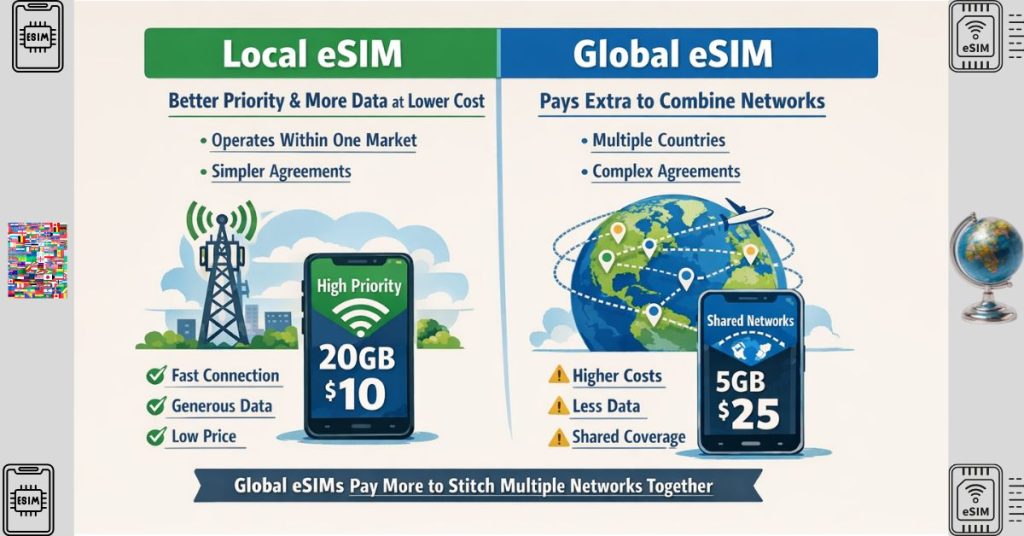
Local eSIMs usually have better radio priority and more generous data at a lower price because they operate inside one market with simpler agreements. Therefore, when you compare global eSIM vs local eSIM, remember that the global product pays extra to stitch many networks together under one subscription. Check our Data eSIM coverage for your next international trip!
Some providers offer regional eSIM plans as a middle ground, for example, a Europe pass that covers many EU and nearby countries in one bundle. These regional international eSIM plans often deliver a better mix of speed, price, and coverage than a pure global travel eSIM if you stay within that region.
When and who should buy this?
Global Travel eSIMs are most suitable for sea farers, airline crew, or digital nomads who keep traveling most of the year and not like normal tourists, for whom buying and managing separate eSIMs frequently is not practical or advisable. For normal tourists—for example, if you are going to Japan or Thailand or Europe or Australia—it is usually better to buy country‑specific or region‑specific eSIMs; you will generally get better deals in terms of pricing, more data, and often better performance.
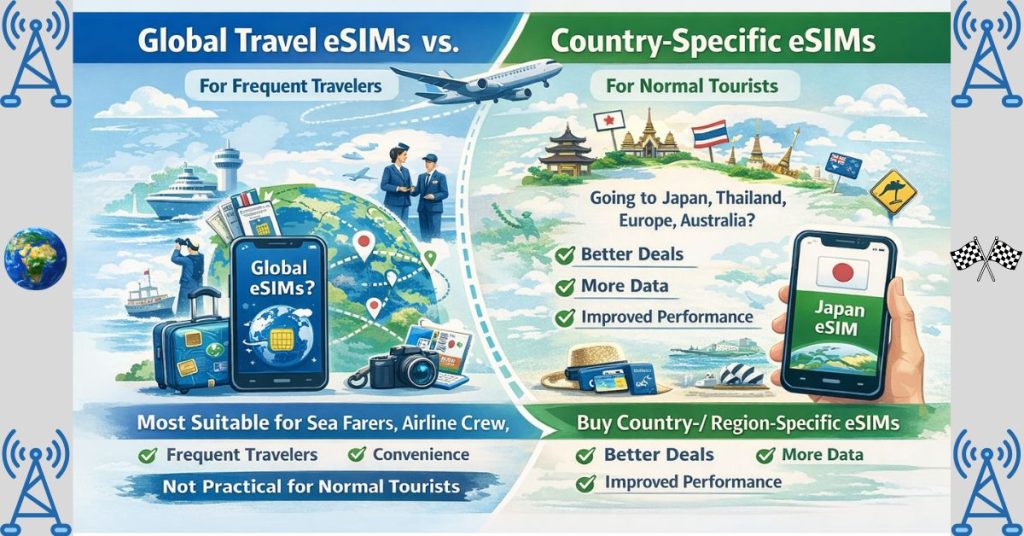
This is not to say a global eSIM will not work in those scenarios, but for point‑to‑point trips, it is usually more optimal to buy specific plans rather than pay for global coverage you are not fully using. Global plans shine when your travel pattern is complex, frequent, or multi‑region over an extended period.
This is not to say a global eSIM will not work in those scenarios, but for point‑to‑point trips, it is usually more optimal to buy specific plans rather than pay for global coverage you are not fully using. Global plans shine when your travel pattern is complex, frequent, or multi‑region over an extended period.
For digital nomads moving between hubs in Europe, Asia, and the Americas, a global travel eSIM cuts friction and avoids constant local registrations or ID checks. Likewise, for business travelers with last‑minute route changes, a single global eSIM vs local eSIM juggling acts feels safer and more predictable.
Seafarers and airline crew deal with layovers in many jurisdictions, so they rarely know which country they will spend meaningful time in. In these cases, international eSIM plans with global coverage let them focus on their schedule rather than chasing airport kiosks for new SIMs.
Families on multi‑country vacations can sometimes mix: one parent uses a global travel eSIM as backup, while others use cheaper country or regional plans. That way, at least one phone stays online if any local eSIM fails, while the rest optimize cost and speed.
Practical things to consider before buying
When choosing between global travel eSIM, regional passes, and local eSIMs, always start with your exact route and trip length. Map the countries, nights per stop, and likely data usage, then shortlist international eSIM plans whose coverage list actually matches your path.
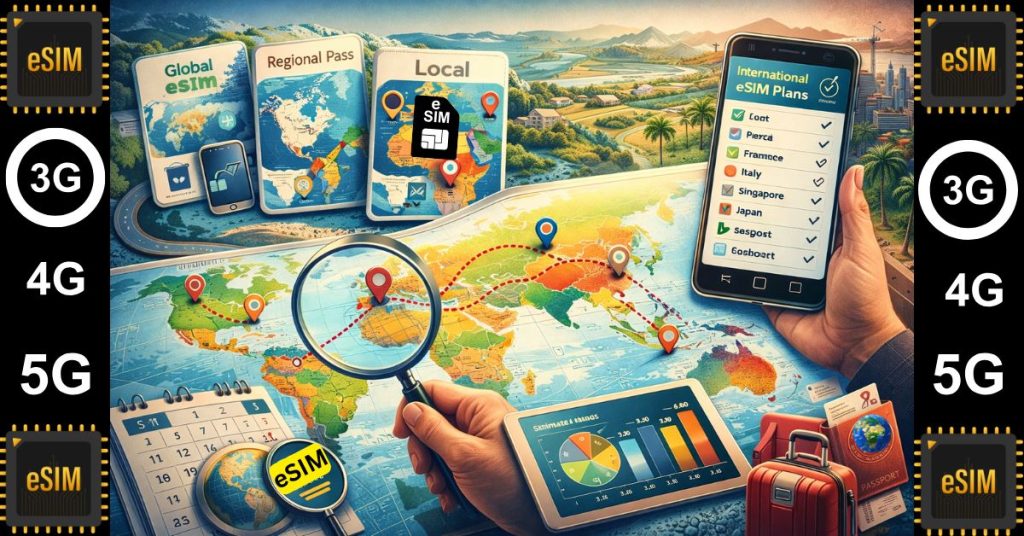
Next, check device compatibility carefully because not all phones support eSIM, and some carrier‑locked models may restrict profiles. Confirm that your device accepts multiple eSIMs if you plan to stack a global travel eSIM with a local eSIM for backup.
Then, compare price per gigabyte across global eSIM vs local eSIM options instead of only looking at headline validity days. Many “unlimited” international eSIM plans include fair‑use limits that throttle speeds after a few gigabytes daily, which impacts video, tethering, and uploads.
Look at the supported networks in each country, not just the coverage count, because some providers only partner with one operator per market. If that operator has weaker rural coverage or slower 4G, your global travel eSIM experience will reflect that limitation during day‑to‑day usage.
Activation process also matters, so read whether the provider allows QR install in advance or only after arrival with Wi‑Fi. Ideally, install the profile at home, keep data off, and then enable the international eSIM plan only after landing to avoid accidental charges on your primary SIM.
Finally, consider support quality and app experience, because you may need quick troubleshooting when data fails during a tight connection. A good app clearly shows remaining data, validity, and supported countries, which helps you decide when to switch from regional to global travel eSIM mid‑trip.
Why smart travelers combine roaming and eSIM for security
Smart travelers often keep their primary number active on limited roaming while using a global travel eSIM for heavy data. This combination lets banking OTPs and emergency calls reach the original SIM, while the international eSIM plan handles maps, social media, and work apps.

Using a global travel eSIM reduces the need to hand over passports or scan random QR codes at kiosks, which lowers fraud risks. Because the profile downloads from a trusted store or brand, the chance of SIM swap scams or cloned physical cards drops significantly during trips.
From a privacy angle, eSIM roaming uses strong encryption and secure elements inside the device, which helps protect authentication keys. Even if someone briefly accesses your phone, they cannot easily remove or duplicate an embedded global travel eSIM as they might with a plastic SIM.
When comparing global eSIM vs local eSIM for security, local street vendors sometimes feel cheaper but may involve unknown resellers or unofficial registration. By contrast, reputable international eSIM plans and official operator apps follow stricter KYC and data protection rules, which benefits frequent travelers.
Combining basic home‑network roaming with an active global travel eSIM also builds redundancy in case one network fails or throttles unexpectedly. If the global plan struggles in a fringe location, you can briefly fall back to your home carrier’s roaming or quickly add a local eSIM as a third layer.
For high‑risk profiles like journalists, executives, or fintech workers, this layered setup with eSIM and roaming reduces physical SIM theft and unauthorized swaps. Keeping profiles inside the device and managed remotely makes it harder for attackers at foreign airports or hotels to tamper with connectivity.
Conclusion, suggestions, and when to choose which eSIM
Global travel eSIM products, local eSIMs, and regional passes all solve slightly different problems for travelers today. The best eSIM for frequent travelers usually balances coverage, cost per gigabyte, and the flexibility to cross borders without losing data.
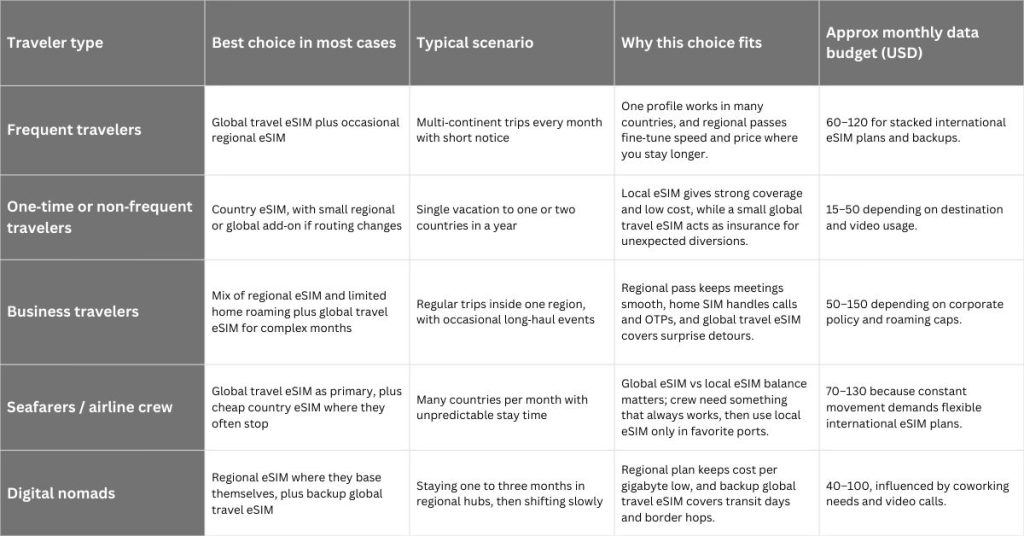
As a rule of thumb, use a country eSIM when staying mainly in one nation, especially if you care about speed and budget. Use a regional plan when you travel across a cluster like Europe or Southeast Asia, and reserve global travel eSIM plans for complex, multi‑continent routes.
Smart travelers also think about how global roaming works on their primary SIM and then layer an international eSIM plan to control costs. This way, global eSIM vs local eSIM is not an either–or decision; instead, you blend them depending on each trip’s pattern and risk level.
Above is a simple guide to when each option usually makes sense, including a broad monthly budget range per traveler type. Amounts assume typical 10–30 GB usage with mainstream providers and may vary by destination and season.
You may like reading similar Blogs
Can i change the APN Settings?
Pocket WiFi vs eSIM in Japan: Pros and Cons for Tourists
WiFi Calling vs Cellular: Which One’s Better for You?
Staying Connected: WhatsApp Calling Alternatives for International Tourists in Dubai and Workarounds
eSIM for Silent Roamers: Affordable Data Plans and Limitations
eSIM vs public WiFi vs VPN: A Comparison of Internet Access Methods




Leave a comment