

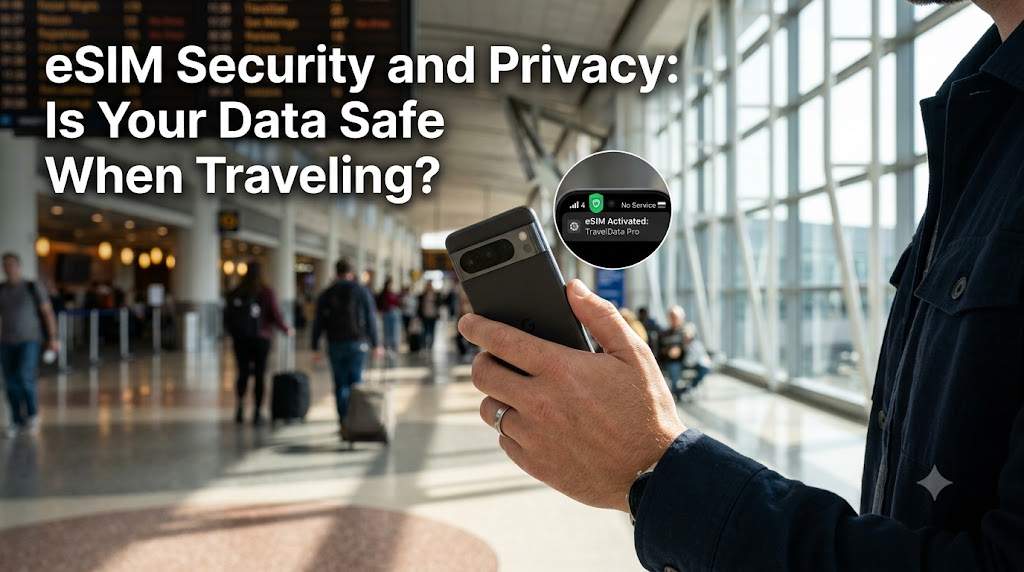
You step off a long international flight into a bustling foreign airport terminal. You immediately need transportation, map directions, and a quick message to family. Consequently, you face a very common travel dilemma upon arrival. Should you connect to free public airport Wi-Fi or hunt for a local SIM card kiosk?
Today, millions of international travelers choose a modern digital alternative instead. Digital travel profiles promise instant mobile connectivity across international borders. However, you might naturally worry about the real risks to your personal information. Is eSIM safe to use abroad, or does it expose your digital life to hackers?
In this comprehensive guide, we examine the technical mechanics of travel eSIM data protection. Furthermore, we analyze hardware encryption, data routing, and real-world privacy risks. Read on to learn why switching to an embedded SIM upgrades your digital safety while traveling.
The Travel Connectivity Dilemma: Wi-Fi vs. SIMs vs. eSIMs
Traveling to new countries always creates connectivity challenges for modern smartphones. Furthermore, keeping your sensitive data protected on unfamiliar networks requires constant vigilance.
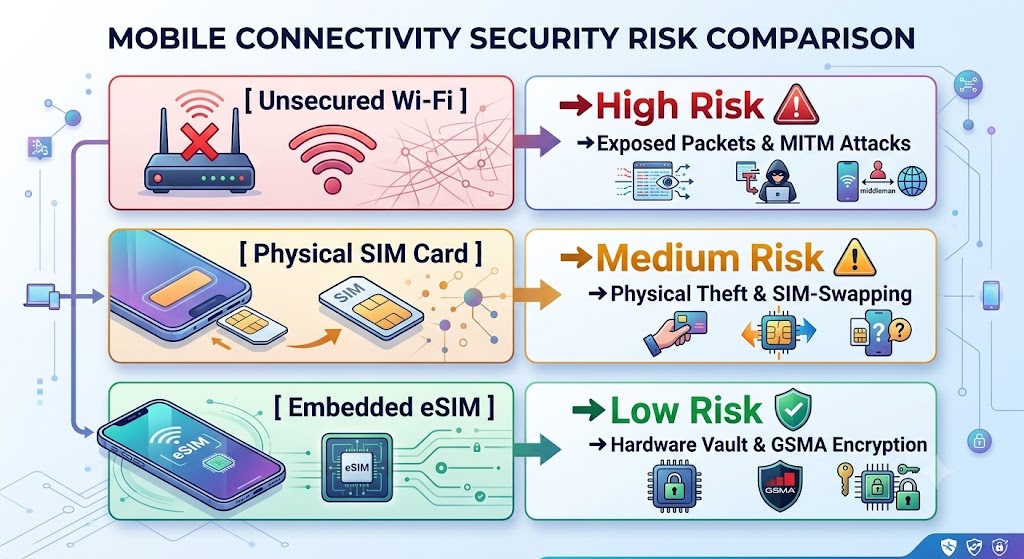
In the past, international travelers relied heavily on physical SIM cards or open public Wi-Fi. However, both traditional options create significant security vulnerabilities for your mobile device. Open Wi-Fi exposes your passwords to hackers sitting on the same network. Meanwhile, swapping tiny plastic SIM cards creates physical loss risks and unexpected roaming charges.
An embedded SIM changes this entire equation by eliminating physical cards completely. Instead, your phone downloads a secure digital profile directly onto an internal microchip. Consequently, travelers gain immediate access to local cellular data without exposing their hardware.
How does eSIM privacy traveling actually protect your personal information on foreign networks? To understand the answer fully, we must examine the hardware technology powering these chips.
How eSIM Security Works Under the Hood
Digital SIM technology relies on rigorous global safety standards developed by top telecom experts. Therefore, eSIM security is built directly into your device hardware from day one.
The eUICC Chip: Why Hardware-Level Protection Wins
Every compatible smartphone contains a specialized microchip called an eUICC (Embedded Universal Integrated Circuit Card). Furthermore, this tiny internal component functions as an isolated hardware vault inside your phone.
When exploring how eSIM hardware secure element protects data, physical hardware isolation is key. The eUICC chip operates on its own dedicated memory and secure operating system. As a result, malicious software apps on your phone cannot access stored cryptographic keys.
In fact, altering or extracting data from this secure element requires specialized industrial laboratory equipment. Consequently, physical tampering becomes practically impossible for common street thieves and hackers alike.
GSMA Global Standards and OTA (Over-The-Air) Encryption
In addition to hardware isolation, digital profiles follow strict GSMA security guidelines. The GSMA represents hundreds of major mobile network operators worldwide.
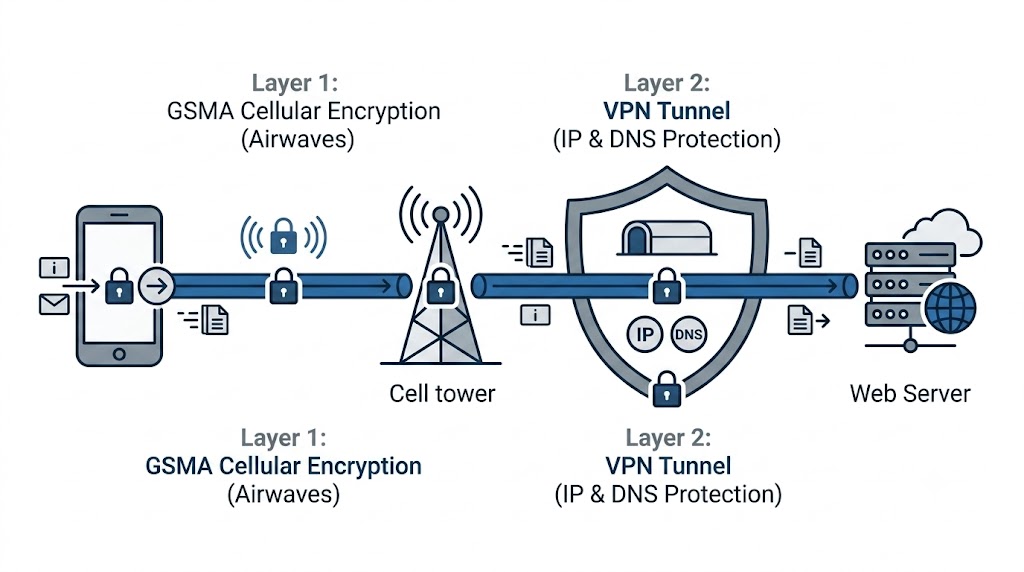
When you purchase a travel profile, your phone downloads data using Over-The-Air (OTA) encryption. Specifically, the carrier encrypts your profile package using unique cryptographic keys. Therefore, hackers cannot intercept or decrypt your digital profile during the download process.
As a result, your travel eSIM data protection remains active before you even land at your destination. This seamless digital delivery completely removes the need for physical card handling in crowded places.
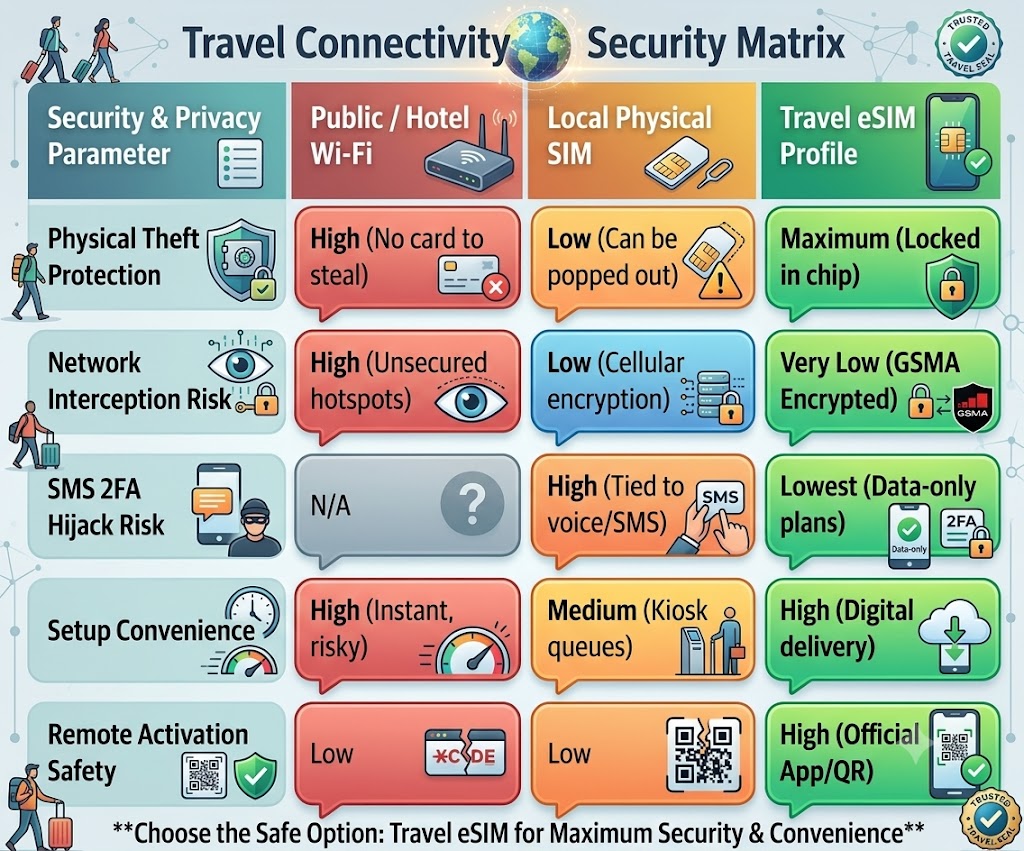
The Security Showdown: eSIM vs. Physical SIM vs. Public Wi-Fi
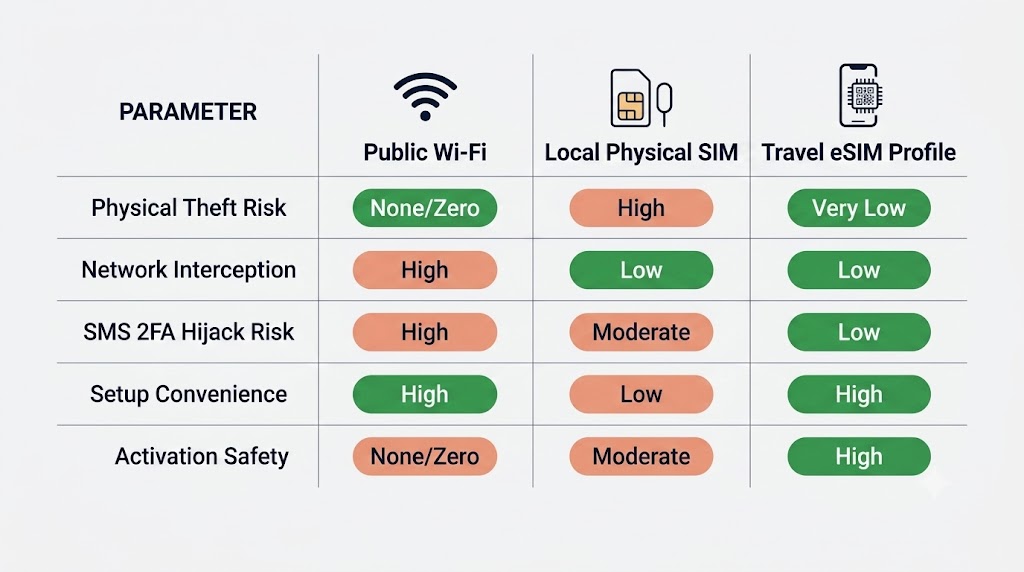
Evaluating your connectivity choices requires a direct side-by-side technical comparison. Consequently, we must analyze how digital profiles stack up against legacy connectivity methods.
Why Public Wi-Fi Remains the Biggest Travel Security Risk
Unsecured public Wi-Fi networks in airports and hotels pose severe security threats. Specifically, cybercriminals easily set up fake hotspots to steal your unencrypted internet traffic.

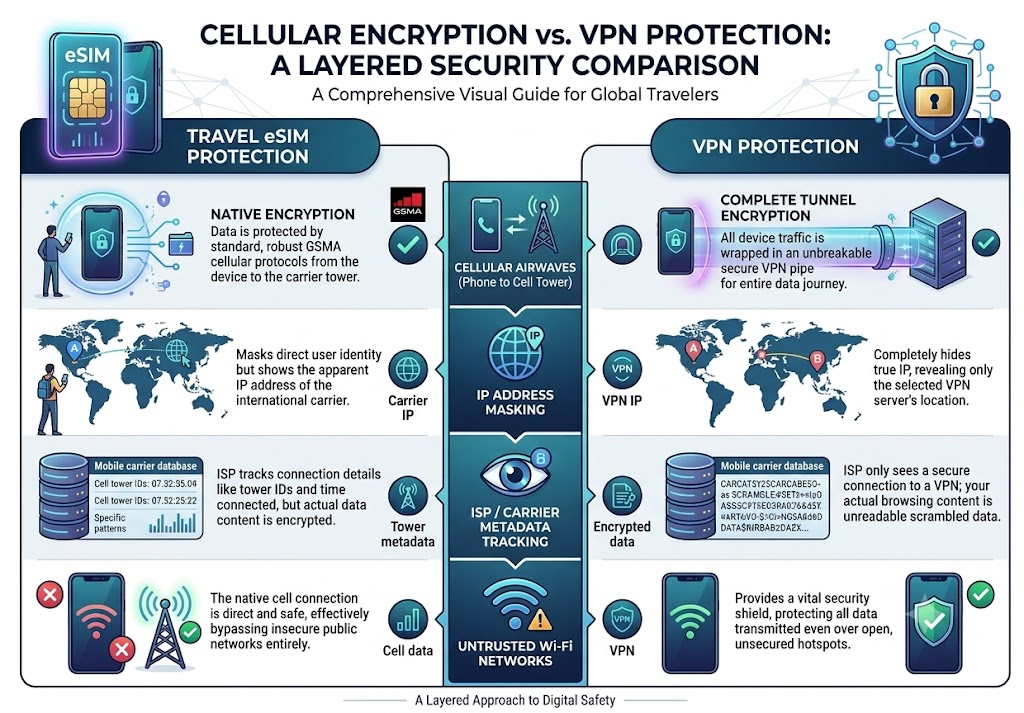
When travelers ask is travel eSIM safer than public wifi, the technical answer is an overwhelming yes. Cellular networks encrypt your connection automatically between your smartphone and local cell towers. Therefore, hackers sitting near you in a coffee shop cannot sniff your data packets. In contrast, open Wi-Fi leaves your browsing activity exposed to anyone on the network.
Physical SIM Vulnerabilities: Theft, Loss, and SIM-Swapping
Legacy plastic SIM cards carry inherent physical weaknesses that travelers often ignore. For instance, thieves can easily eject a plastic SIM card using a simple paperclip.
When evaluating eSIM vs physical SIM security, digital profiles offer massive security advantages. A stolen physical SIM allows criminals to access your phone number immediately on another device. Consequently, thieves can bypass two-factor authentication (2FA) and hijack your financial accounts. Conversely, an embedded SIM cannot be physically removed or stolen from a locked smartphone.
The Data-Only eSIM Advantage: Decoupling Data from 2FA
Most travel eSIM profiles provide data services without assigning a traditional voice phone number. Interestingly, this design choice creates a powerful security shield for international travelers.
Many online accounts send critical 2FA login codes via standard SMS text messages. If you use a local physical SIM, your primary phone number goes offline completely. However, a data-only travel profile keeps your primary voice line secure while supplying internet access. Consequently, you eliminate the risk of missing urgent security alerts or suffering local SIM-swap fraud.
eSIM Privacy Explained: What Data Is Exposed Abroad?
Data security protects your files, but privacy controls who tracks your online activity. Therefore, understanding eSIM privacy traveling requires looking at how foreign data moves across borders.
How Foreign Data Routing (APN) Works
When you use cellular internet abroad, your phone connects through international roaming agreements. Specifically, local cell towers route your data back to home servers via designated Access Point Names (APNs).
Consequently, many travelers ask does a travel eSIM track your personal location continuously. Local cell towers must know your general vicinity to deliver cellular signal effectively. However, the travel eSIM provider only sees network metadata and total data consumption. Furthermore, websites using HTTPS encryption hide your specific page views and sensitive input fields entirely.
Do You Still Need a VPN with a Travel eSIM?
Many travelers wonder do I still need a VPN with a travel eSIM when browsing abroad. Although cellular connections provide strong network encryption, a VPN adds essential privacy protections.
Specifically, a VPN hides your real IP address and encrypts your DNS requests. Furthermore, a VPN prevents foreign internet service providers from logging your overall browsing habits. Combining cellular data encryption with a reliable VPN creates a bulletproof digital shield for sensitive tasks. For instance, are data-only travel eSIMs safe for online banking? Yes, but adding a VPN ensures maximum transactional privacy.
Real-World eSIM Risks and How to Protect Yourself?
Although digital profiles offer robust protection, no technology is entirely immune to scams. Consequently, travelers must remain vigilant against social engineering and fraudulent setup practices.
QR Code Phishing and Malicious eSIM Apps
Cybercriminals often target travelers through fake travel deal websites and deceptive online advertising. Specifically, scammers distribute malicious QR codes designed to steal payment details or install invalid profiles.
To guarantee complete eSIM QR code phishing scam protection, purchase profiles exclusively from verified vendors. Always download official provider apps from trusted platforms like Apple App Store or Google Play Store. Furthermore, avoid scanning random activation QR codes sent via unverified messaging channels or public forums.
Protecting Your Primary Carrier Account from SIM-Swap Attacks
While travel eSIMs reduce risks, your primary domestic SIM remains an attractive target for hackers. Therefore, you must learn how to prevent eSIM SIM swap attacks abroad before traveling.
First, set up a strong account PIN with your home mobile carrier before departing. Second, request a transfer lock on your primary phone number to prevent unauthorized transfers. Finally, switch your critical banking apps from SMS 2FA to authenticator apps like Google Authenticator.
The Ultimate 5-Step Pre-Travel eSIM Security Checklist
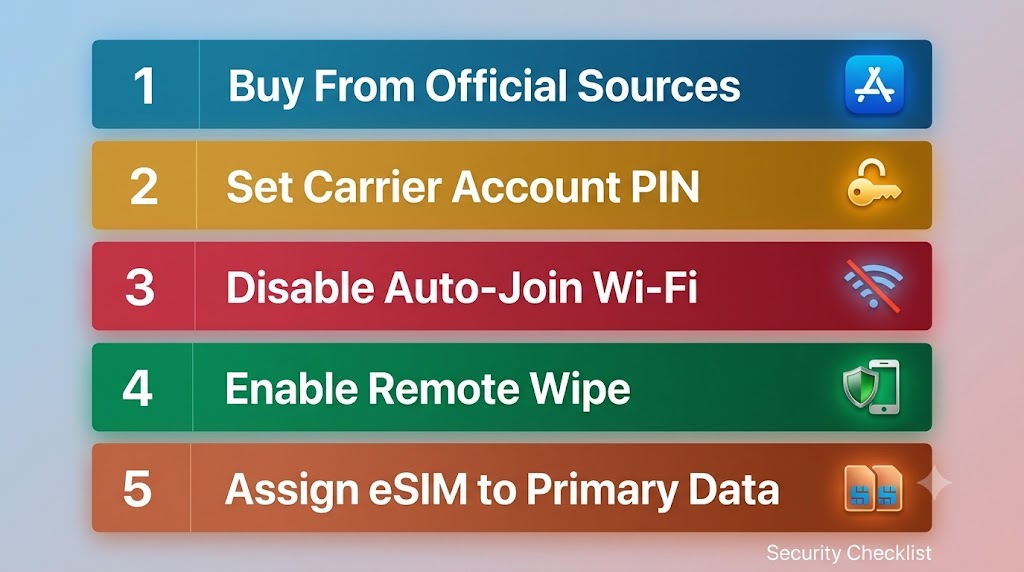
Preparing your smartphone before departure ensures a seamless and secure digital journey abroad. Follow these five simple steps to maximize your travel eSIM data protection:
- Buy From Official Sources: Download your provider app directly from official app stores before leaving home.
- Set Carrier Account PINs: Contact your primary domestic carrier to lock your main account with a unique passcode.
- Disable Auto-Join Wi-Fi: Turn off automatic Wi-Fi connections in your phone settings to avoid rogue hotspots.
- Enable Remote Device Wiping: Activate “Find My” (iOS) or “Find My Device” (Android) to lock or wipe lost phones remotely.
- Set Travel eSIM as Primary Data: Assign your digital profile strictly for cellular data while keeping primary voice lines secure.
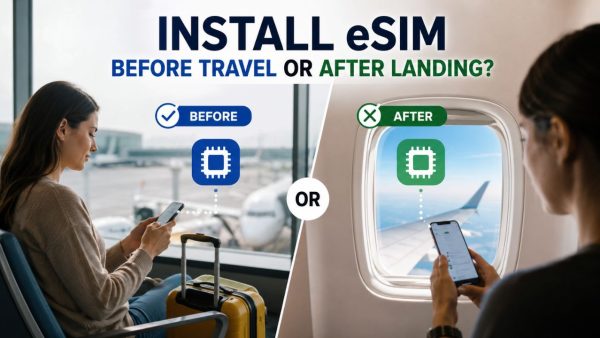
Pro Tip: Complete your eSIM profile installation while still on your trusted home Wi-Fi network. This guarantees a safe installation environment before exposing your phone to airport networks.
Frequently Asked Questions (FAQs)
Can an eSIM be hacked while traveling?
No, digital profiles cannot be intercepted or cloned over the airwaves during normal use. The embedded eUICC chip stores your profile inside an isolated, hardware-encrypted vault. However, you should still protect your phone with strong passcodes and biometric locks.
Is eSIM safe to use abroad for mobile banking?
Yes, using cellular data from an embedded SIM is significantly safer than connecting to public Wi-Fi. Cellular networks utilize end-to-end encryption between your device and local cell towers. Furthermore, pairing your connection with a reputable VPN ensures total privacy for financial transactions.
Does a travel eSIM track your personal location?
Your digital provider sees the general cell towers required to deliver local data service. However, providers cannot track your precise GPS coordinates unless you grant specific app permissions. Furthermore, browsing websites over HTTPS prevents carriers from viewing your private web activity.
What happens if I lose my phone with an eSIM installed?
Thieves cannot remove an embedded SIM to access your data or steal your physical card. Consequently, your digital profile remains locked inside your stolen device. You can immediately wipe your device remotely using official cloud tracking tools to protect all stored information.
Why is eSIM vs physical SIM security better for frequent travelers?
Embedded SIMs eliminate physical card handling, tray ejection theft, and card loss completely. Additionally, digital delivery prevents SIM cloning and allows instant carrier switching without visiting physical kiosks. Consequently, travelers enjoy superior physical and digital safety across international borders.
Final Verdict: Is Your Data Safe with a Travel eSIM?
In conclusion, switching to an embedded SIM represents a major security upgrade for international travelers. By eliminating physical card risks and bypassing dangerous public Wi-Fi, digital profiles keep your personal information secure.
Furthermore, understanding eSIM privacy traveling empowers you to explore the world with complete confidence. When you combine hardware-encrypted eSIM security with a reliable VPN, your data remains fully protected everywhere you roam.
You may like reading similar Blogs
eSIM for Short Layovers and Airport Transit: Do You Really Need Data for 2–6 Hours?
Best eSIM, Physical SIM for Southeast Asia: Nepal, Sri Lanka, Philippines, Bali Compared
Best Asia eSIM for Indians, NRIs and International Tourists: Travel Across 20 Plus Countries
Affordable eSIM for Singapore: Safe High‑Speed Data for International Tourists
Is ‘Unlimited’ eSIM Really Unlimited? The Truth About Throttling & Hidden Data Limits
How Much eSIM Data Do I Really Need? A Calculator for Every Type of Traveler
Complete eSIM Troubleshooting Guide — Why It’s Not Working & How to Fix It
How to check eSIM Data usage on iPhone?
Why you should use eSIM and Wi-Fi Map in conjunction? On your international trip..
12 Factors That Effect Your Data Speed On Foreign Trip
eSIM vs public WiFi vs VPN: A Comparison of Internet Access Methods
Can i change the APN Settings?
Can an eSIM and Physical SIM have the same number?
Is eSIM signal strength the same as a Physical SIM?
Pocket WiFi vs eSIM in Japan: Pros and Cons for Tourists
WiFi Calling vs Cellular: Which One’s Better for You?
Should I Install My eSIM Before Travel or After Landing? The Complete Answer
Subscribe to our YouTube channel and follow us on Instagram for more updates.

Leave a comment