

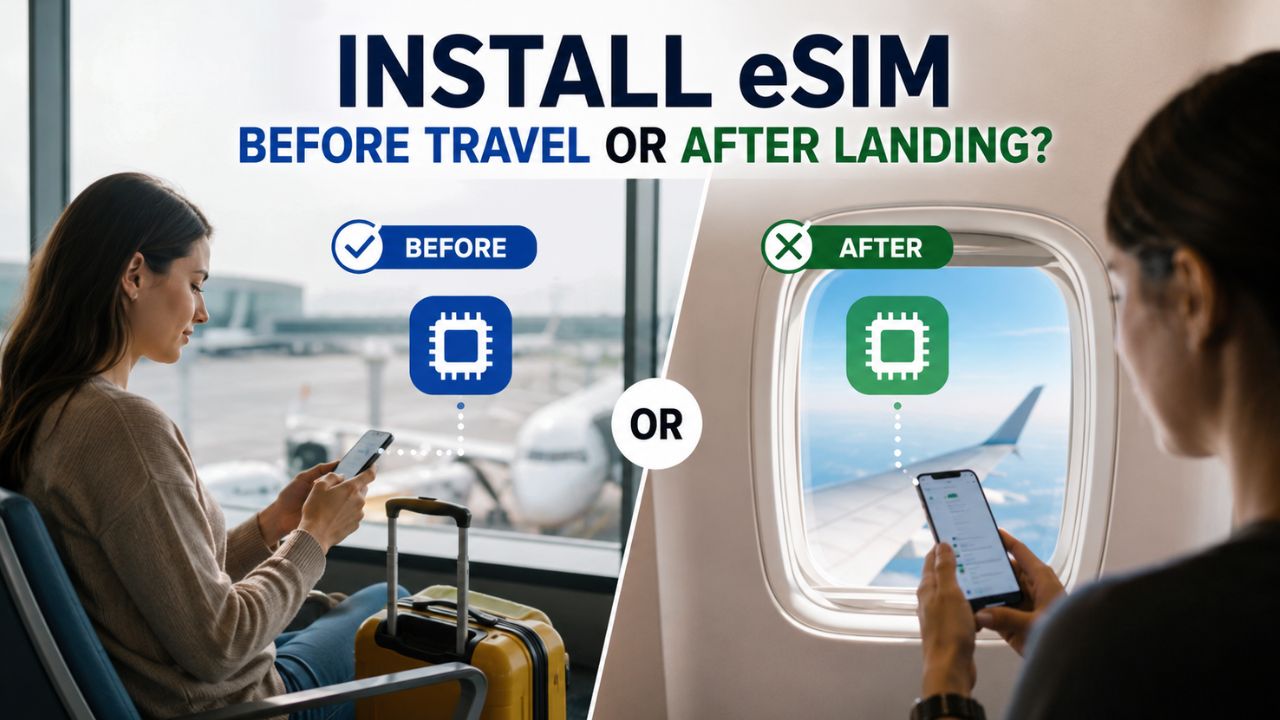
Most travelers ask the same question the night before a flight: should I install eSIM before traveling, or wait until landing? The short answer is simple. You install early, but you activate late. This one habit saves data, money, and stress on every trip.
Why Installation And Activation Are Not The Same
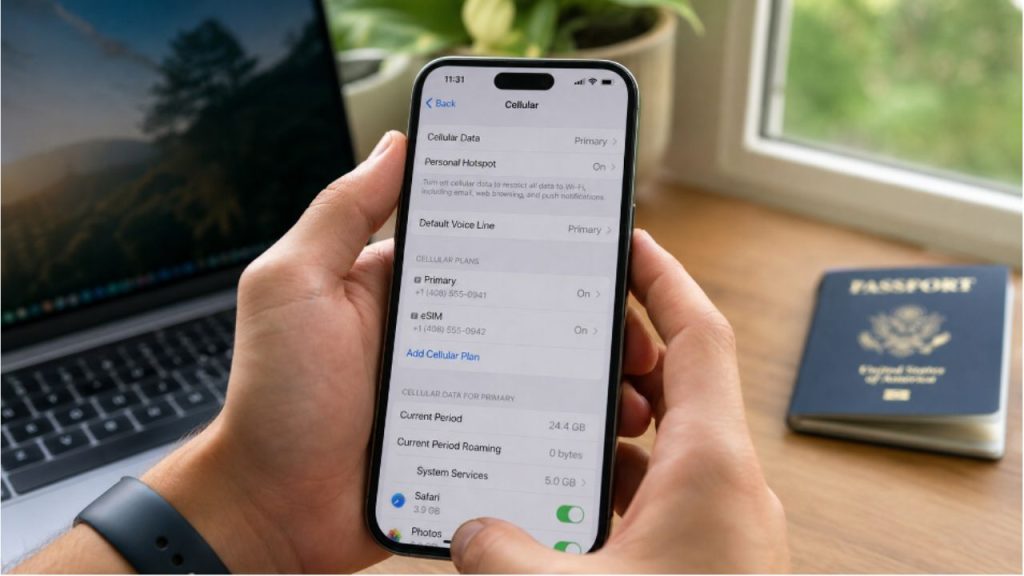
Many travelers confuse two different steps, and that mix-up creates real problems abroad. Installing an eSIM only places a digital profile on your phone. It does not switch on your data plan yet.
Activation is the second, separate step. It is the moment your phone actually connects to a network and starts using data. Therefore, does installing an eSIM activate it? No, in most cases it does not.
This distinction answers a common bonus question directly: does eSIM start working immediately after installation? Rarely. Most travel plans wait for a network connection before the clock starts.
When To Install eSIM Before Travel
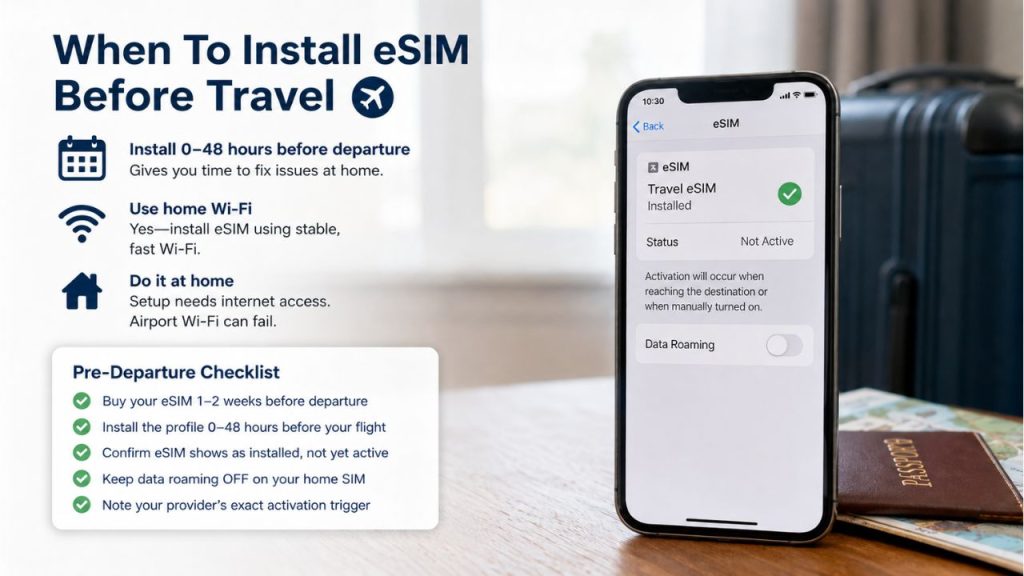
So, when to install eSIM before travel exactly? Providers and support teams consistently recommend one to three days before departure. This gives you time to fix any setup issues while still at home.
Installing early also answers another common concern: can I install eSIM using Wi-Fi before travel? Yes, and you should. Home Wi-Fi is stable, fast, and far more reliable than airport networks.
Consequently, should I install eSIM before leaving home? Absolutely, because setup requires internet access, and airport Wi-Fi often fails at the worst moment. Installing at home also protects you if your provider needs manual verification steps.
Here is a simple pre-departure checklist most guides agree on:
• Buy your eSIM one to two weeks before departure for the best plan options
• Install the profile two to three days before your flight, using home Wi-Fi
• Confirm the eSIM shows as installed, not yet active, in your settings
• Leave data roaming turned off on your home SIM during this step
• Note your provider’s exact activation trigger before you fly
Should I Install eSIM Before Traveling At All
If you are still wondering should I install eSIM before traveling, the evidence points one way. Every major provider guide confirms early installation avoids last-minute stress. However, installing early does not mean using your data early.
This matters because some plans behave differently. A few providers, like certain O2 and Vodafone options, activate the moment you buy them, not when you install. So always check your provider’s specific terms before assuming standard behavior.
For most data-only travel eSIMs though, the rule stays consistent. Install whenever convenient, but don’t connect to a network until you land. That single habit prevents wasted days on your plan.
Install eSIM Before Or After Landing: The Real Answer
The phrase install eSIM before or after landing causes the most confusion online. In truth, installation and landing have nothing to do with each other. You install before landing, always, and activate only after landing.
Meanwhile, activation is the step tied to your location. Most providers require you to be inside the destination country to connect successfully. Attempting activation from home usually fails or simply does nothing.
This also answers can I activate eSIM before arriving in another country? Generally, no. Your device needs a local network to complete activation, so waiting until arrival makes practical sense.
When Should I Activate My eSIM For Travel

Timing your activation correctly protects your data days completely. So when should I activate my eSIM for travel exactly? The best moment is right after landing, ideally in the arrivals hall.
Some travelers prefer activating while the plane is still taxiing to the gate. Others wait until they reach immigration or baggage claim. Either way, the goal stays the same: activate only once you are truly at your destination.
This leads to another frequent bonus question: eSIM activation at airport, is it recommended? Yes, arrival airports are ideal because signal strength is usually strong and reliable there.
How To Install eSIM Before Traveling Abroad
Wondering exactly how to install eSIM before traveling abroad, step by step? The process stays fairly simple across providers, though small details vary by phone brand. Follow these steps carefully before your departure date.
Follow these steps carefully before your departure date.
1. Purchase your eSIM plan from a trusted provider website or app like Symbaa by Hubbing Ecom or their website
2. Connect your phone to stable home Wi-Fi before starting setup
3. Scan the QR code provided, or use the automatic install link
4. Confirm the new eSIM profile appears under your cellular settings
5. Leave the new eSIM toggled off until you actually land
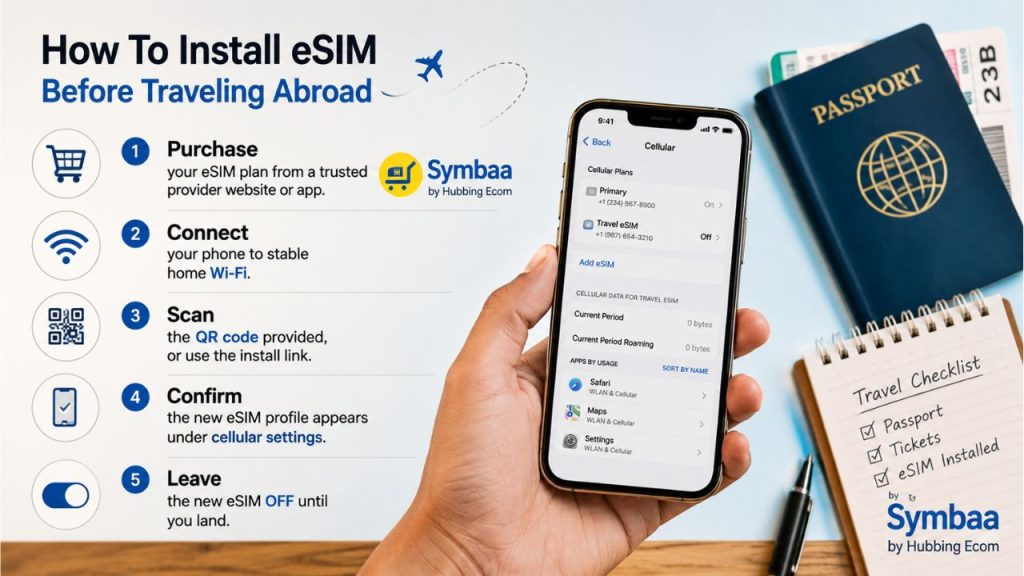
Following this order answers eSIM installation vs activation for travel clearly. Installation is preparation. Activation is execution. Keep these two mentally separate, and confusion disappears fast.
Can I Install eSIM Without Activating It
Yes, and this is actually the recommended approach for most travelers. Can I install eSIM without activating it safely? Absolutely, because installation alone does not use data or start your plan’s countdown.
This flexibility means you can install eSIMs for multiple upcoming trips in advance. Each profile simply waits, dormant, until you choose to switch it on. Nothing gets charged or consumed during this waiting period.
Does Installing eSIM Start The Data Plan
A related worry deserves its own answer here. Does installing eSIM start the data plan automatically? For most data-only travel plans, no, it does not.
However, exceptions exist among certain full-service telecom plans. Some UK carriers start validity from the purchase date, regardless of installation timing. Always read your specific plan’s terms before relying on general advice.
Travel eSIM Activation After Landing: Step By Step
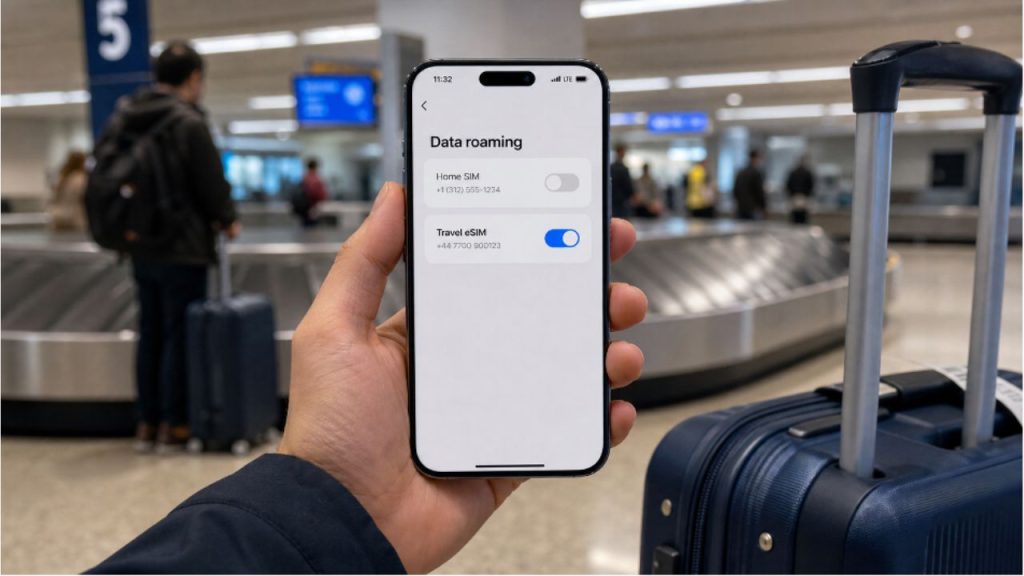
Once you touch down, travel eSIM activation after landing takes only a few minutes. Follow this sequence for a smooth, error-free connection experience every time you travel internationally.
1. Open your phone’s cellular or mobile network settings menu
2. Select your travel eSIM and toggle it on for data use
3. Enable data roaming specifically for that travel eSIM line
4. Turn off data roaming completely on your home SIM card
5. Set the travel eSIM as your default line for mobile data
6. Disable Wi-Fi briefly and confirm the connection works
This sequence directly answers how to use eSIM when arriving in another country. Follow it in order, and connectivity usually arrives within thirty seconds.
How Early Can I Activate A Travel eSIM
Some travelers push boundaries and ask how early can I activate a travel eSIM before real need arises. Technically, most data-only eSIMs cannot activate until they detect a supported destination network.
That said, providers do allow purchase and installation weeks ahead of travel. Just remember that early installation never equals early activation for typical travel plans. The two events remain independent unless your specific provider states otherwise.
Common Mistakes Travelers Should Avoid
Even careful travelers slip up occasionally with eSIM timing. Awareness of these mistakes prevents wasted money and frustrating connectivity gaps during your very first hours abroad.
• Activating the eSIM at home out of excitement, wasting valid data days
• Forgetting to disable the home SIM’s roaming after switching lines
• Assuming installation equals activation, then panicking over no signal
• Waiting until landing to install, then struggling with weak airport Wi-Fi
• Ignoring provider-specific rules that differ from general best practices
Avoiding these errors keeps your travel connectivity smooth from touchdown onward. Consequently, a little preparation at home saves considerable frustration abroad later.
Understanding How eSIM Technology Actually Works
An eSIM is a digital SIM card built directly into your phone’s hardware. Unlike physical SIM cards, it needs no tray, no ejector tool, and no plastic chip. This design makes travel far simpler for frequent flyers.
Because everything happens digitally, providers can push new profiles instantly to compatible devices. Your phone simply downloads a small file containing network credentials. However, that download step does not automatically connect you to any network.
This is why installing and activating remain two distinct technical processes. The industry treats them separately for a good reason. Doing so protects both the traveler’s data validity and the provider’s network resources.
Checking Device Compatibility Before You Install
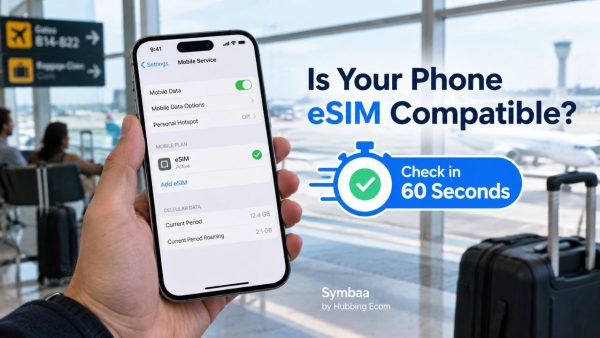
Before worrying about timing, confirm your phone actually supports eSIM technology. Most flagship phones released after 2018 include this feature, though budget models sometimes skip it entirely.
Check your device settings under mobile or cellular options. Look specifically for an “Add eSIM” or “Add Cellular Plan” button. If it appears, your phone supports eSIM installation without additional hardware.
Why Timing Mistakes Cost Travelers Real Money
Getting the timing wrong is not just inconvenient; it can genuinely waste money. Many travel eSIM plans run on fixed validity windows, often five, ten, or thirty days.
If you activate too early, that countdown starts before your trip even begins. You could lose an entire day, or more, sitting unused while you are still packing at home. This directly answers why you should install eSIM before traveling but never activate early
On the other hand, waiting too long after landing creates a different problem entirely. You might miss critical connectivity during your first hours abroad, including ride-hailing apps or hotel check-ins. Balanced timing solves both risks simultaneously.
What Happens If You Forget To Activate On Arrival
Occasionally, travelers forget to switch on their travel eSIM immediately after landing. Fortunately, this mistake is rarely permanent or costly, unlike early activation errors.
Simply open your settings whenever you remember and toggle the travel eSIM on. Your plan’s validity period begins from that moment, not from your actual landing time. Consequently, forgetting to activate immediately wastes convenience, not money
That said, activating promptly still matters practically. Maps, translation apps, and communication with family often become urgent right after landing. Building the activation habit into your arrival routine avoids unnecessary disconnected minutes.
Frequently Confused Terms Explained Simply
Travelers often mix up related terms while researching eSIM setup online. Clarifying this vocabulary makes every provider’s instructions easier to follow correctly.
• Installation: downloading the eSIM profile onto your device, requiring internet access
• Activation: enabling the profile to connect and use data on a network
• Validity period: the countdown of days your data plan remains usable
• Data roaming: the setting that lets your eSIM use partner networks abroad
• Default data line: which SIM, physical or digital, your phone uses for internet
Understanding these five terms resolves most confusion travelers experience before their first eSIM trip. Additionally, this vocabulary appears consistently across nearly every major provider’s help documentation.
Overall Summary
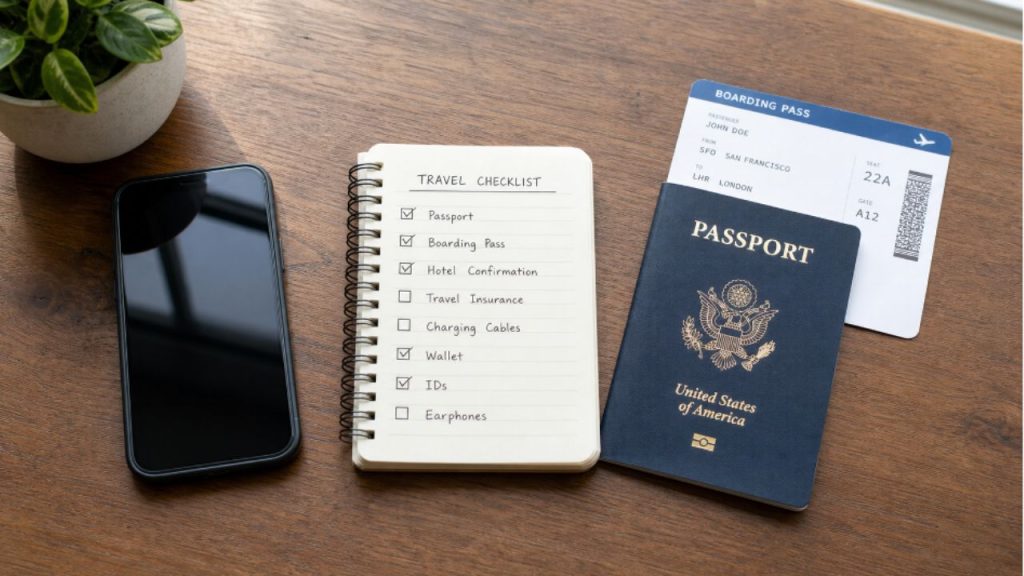
In short, install your eSIM early using stable Wi-Fi, then activate only after landing. This approach protects your data validity while guaranteeing readiness the moment you arrive
Stage | When To Do It | Why It Matters |
Purchase eSIM | 1-2 weeks before departure | Secures best plan pricing and availability |
Install eSIM | 0-48 hours before departure, on Wi-Fi | Avoids unreliable airport networks |
Keep eSIM inactive | Entire home country period | Prevents wasted data validity days |
Activate eSIM | Immediately after landing | Starts plan exactly when data is needed |
Disable home SIM roaming | At activation moment | Avoids costly duplicate roaming charges |
Stay Connected The Smart Way
Once you understand eSIM timing, choosing the right provider matters just as much. An affordable, reliable travel eSIM keeps you connected without roaming shocks or dropped signals abroad.
Hubbing Ecom offers travel data eSIMs built specifically for international travelers who value both cost and reliability. Meanwhile, Symbaa, our dedicated travel eSIM application, lets you install and manage plans across multiple countries from one simple app.
Both options let you install ahead of time, then activate the instant you land, exactly as this guide recommends. Compared to generic marketplace eSIMs, Hubbing Ecom and Symbaa focus specifically on transparent pricing and dependable coverage for travelers. Choosing a trusted, travel-focused brand ultimately matters more than chasing the cheapest listing online.
You may like reading similar Blogs
Global Travel eSIM Explained by a Telecom Professional
eSIM for Short Layovers and Airport Transit: Do You Really Need Data for 2–6 Hours?
Should Data Roaming Be ON or OFF With a Travel eSIM? (The Answer Is Counterintuitive)
How to Use eSIM Abroad Without Missing Your Indian Bank OTP or UPI Alert
Complete eSIM Troubleshooting Guide — Why It’s Not Working & How to Fix It
How Much eSIM Data Do I Really Need? A Calculator for Every Type of Traveler
Is ‘Unlimited’ eSIM Really Unlimited? The Truth About Throttling & Hidden Data Limits
Travel eSIM vs Local SIM vs International Roaming: What Luxury Travelers Prefer Now
Crucial prerequisite of eSIM Utilisation: Unlocking Smooth Communication
12 Factors That Effect Your Data Speed On Foreign Trip
Why you should use eSIM and Wi-Fi Map in conjunction? On your international trip..
Which is better eSIM or International plan?
Pocket WiFi or eSIM? A comparison..
Is eSIM signal strength the same as a Physical SIM?
Why buy laptops with eSIM feature?
Can i change the APN Settings?
Can an eSIM and Physical SIM have the same number?
eSIM for Remote Workers and Digital Nomads
eSIM for Silent Roamers: Affordable Data Plans and Limitations
eSIM for Short Layovers and Airport Transit: Do You Really Need Data for 2–6 Hours?
eSIM Security and Privacy: Is Your Data Safe When Traveling?
eSIM for Digital Nomads and Remote Workers: The Complete Connectivity Setup in 2026
Subscribe to our YouTube channel and follow us on Instagram for more updates.
About the Author
Swatantra Ranjan is a telecom professional with over 15 years of experience in the global telecommunications industry having worked in India & Dubai, specializing in eSIM solutions, voice services, SMS, international roaming, Direct Inward Dialing (DID) numbers, virtual numbers, and sales/services experience in B2C/B2B banking industry. Having traveled to more than 20 countries, he combines deep technical expertise with firsthand international travel experience to create practical, accurate, and trustworthy content on global connectivity, mobile technology, and travel communications. His articles help travelers, businesses, and telecom professionals make informed decisions about staying connected efficiently and securely across the world. Check out LINKEDIN Profile
Leave a comment