

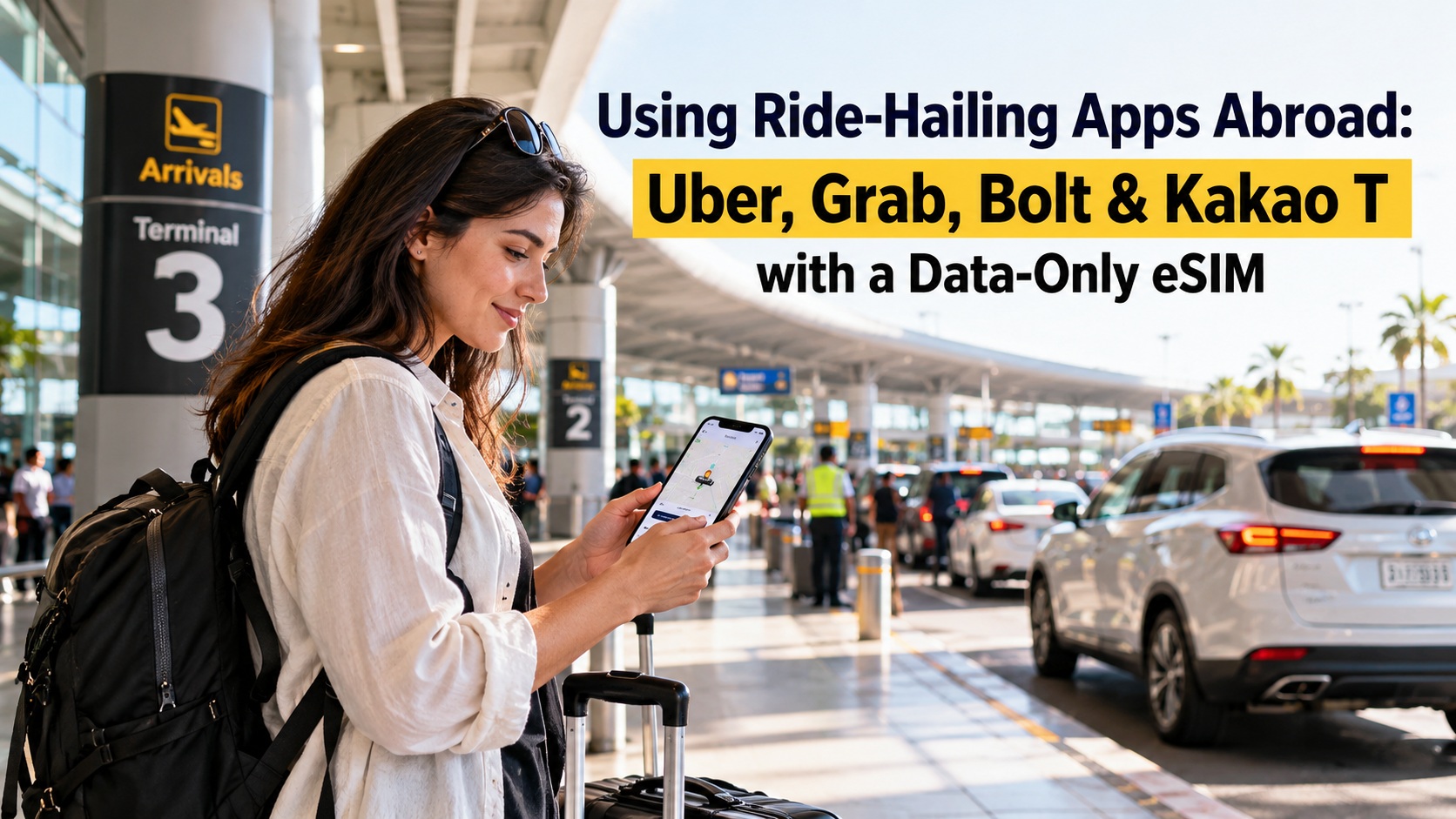
Imagine walking out of an international arrival terminal after a exhausting ten-hour flight. Crowds buzz around you, signs appear in an unfamiliar language, and local taxi touts approach you aggressively. Naturally, you open your favorite smartphone application to book a reliable, fixed-price ride.
Suddenly, a wave of panic hits you as you look at your mobile settings. You purchased a data-only travel profile, which provides fast internet but lacks a local telephone number. You wonder how a local driver will call you to confirm your exact airport terminal gate.
Fortunately, you can easily use data-only eSIM ride hailing apps without purchasing expensive local plastic SIM cards. Modern travel profiles let you book trips, track vehicles on live GPS maps, and message drivers effortlessly.
Most major global mobility networks rely strictly on digital internet packets rather than old analog voice channels. This guide explains how to secure airport transport smoothly while traveling across foreign destinations worldwide.
The Airport Gate Panic: Can You Book a Ride Without a Local Phone Number?
You do not need a local voice telephone number to hail rides abroad. Data-only eSIM ride hailing apps supports ride hailing platforms and use your existing verified home number for identity checks, while trip routing and driver coordination run over your travel eSIM data via in-app VoIP calling and built-in chat. Complete app registration at home before departure to ensure seamless pickups.
Many flyers assume foreign drivers must dial a standard carrier telephone number to find waiting passengers. However, modern ride-hailing services have completely abandoned open cellular circuits for routine driver communication.
Instead, telecom engineers designed these platforms to handle coordinates, live messages, and audio through internet protocols. When you understand how these mobile networks operate, hailing rides overseas becomes remarkably simple and stress-free.
The Core Myth: Why Ride-Hailing Apps Do Not Need Local Voice Lines
Traditional airport taxis historically relied on two-way dispatch radios or direct consumer cellular phone calls. In contrast, modern mobile ride platforms handle vehicle dispatching entirely through centralized cloud servers.
When you request a car, your smartphone transmits GPS telemetry data over high-speed cellular frequencies. The nearest available driver receives your exact pickup pin on their dashboard screen automatically.
Neither party ever needs to initiate an analog carrier telephone call to execute a successful trip. As long as your digital travel profile supplies reliable internet data, your data-only eSIM ride hailing apps works flawlessly.
Separating Account Verification from Active Trip Data
To master foreign transport, you must understand the technical difference between user authentication and live navigation. Ride platforms require an identity verification code sent via text message only once during initial signup.
Once verified, your user account remains active indefinitely within your smartphone operating system memory. Daily ride matching, routing algorithms, payment processing, and driver coordination consume pure mobile data packets.
Therefore, your smartphone requires high-speed data, completely separate from your registered account identification number. This separation lets you safely operate data-only eSIM ride hailing apps without local SIM card purchases.
The Golden Rule: Complete Your App Verification Before Departure
The single largest mistake travelers make involves downloading new transport applications inside foreign arrival halls. When you land abroad, you frequently face congested airport Wi-Fi and confusing network handshakes.
Setting up your digital transport tools at home guarantees smooth airport pickups the moment you touch down. Take ten minutes before heading to the airport to complete all essential profile setup steps.
The Dangerous Trap of Registering on Airport Arrival Wi-Fi
When you open a newly downloaded ride application abroad, the service immediately requests your phone number. The system instantly sends an automated SMS authentication passcode to verify your account ownership.
However, if you disabled your primary home SIM to prevent roaming fees, you cannot receive text messages. Furthermore, free public airport Wi-Fi networks often feature restrictive security firewalls that block incoming verification packets.
Consequently, travelers find themselves stranded at international arrival terminals, unable to hail a car or confirm payments. You can easily bypass this frustration by registering your accounts while connected to your domestic home network.
How to Keep Your Domestic Home Number Active for Account Access
If you must log in while overseas, maintain a dual-SIM setup on your smartphone device. Keep your physical domestic SIM active in slot one, but switch its cellular data roaming switch completely off.
Meanwhile, assign your international travel profile to handle your device mobile data needs. Global cellular networks route incoming text messages freely, allowing you to receive two-factor security passcodes without penalty.
This dual configuration delivers free security passcodes while protecting your personal budget from expensive carrier roaming penalties. You enjoy seamless app authentication while routing active navigation through cheap international travel data.
How Drivers Actually Contact You: In-App VoIP vs. Traditional Calls
When you use your phone overseas, you might wonder how a driver can call your handset. The solution relies on Voice over Internet Protocol, commonly abbreviated across the tech industry as VoIP.
Understanding VoIP helps explain why traditional voice minutes are completely unnecessary for foreign travel. Your data connection handles voice communication seamlessly through the application interface.
The VoIP Audio Pipeline: Calling Directly Over Your Travel eSIM Data
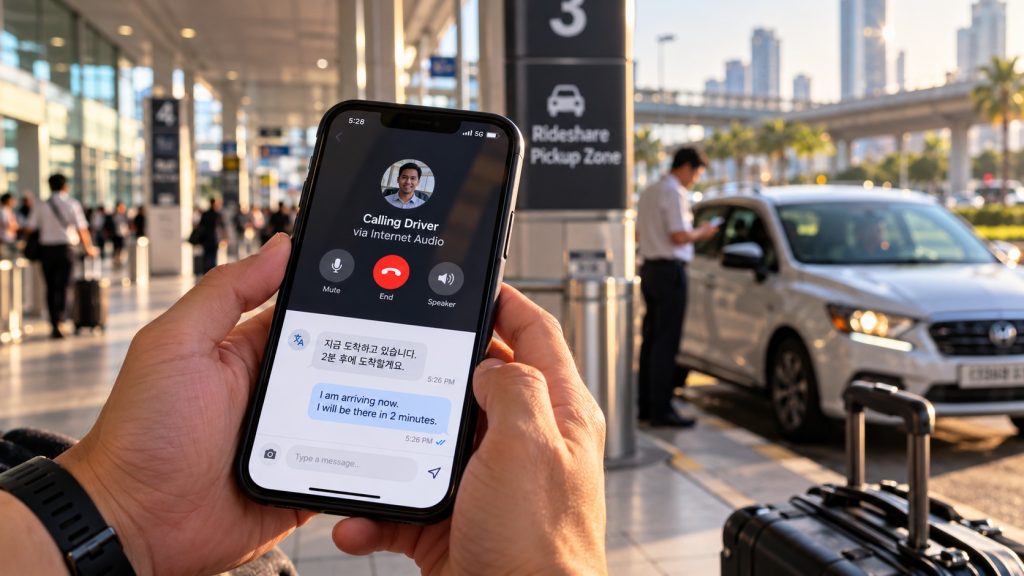
When a driver taps the call button inside their application, the software initiates an encrypted VoIP call. This technology converts spoken human voice into tiny compressed digital packets sent over cellular data networks.
The audio stream travels over your high-speed travel profile just like a standard WhatsApp or FaceTime call. Your phone rings directly inside the ride application interface, using zero traditional cellular minutes.
You can answer clearly, hear the driver, and explain your exact location using high-definition digital audio. This feature functions identically across modern mobile devices without requiring any local telecom carrier subscriptions.
Phone Number Masking: Why Drivers Rarely See Your Real Number Anyway
Global transport applications enforce strict passenger privacy safeguards across their software platforms. Even if you hold an active local SIM card, companies rarely reveal your actual telephone digits to drivers.
Instead, the application bridges calls through localized virtual switchboards or direct peer-to-peer data channels. This privacy protocol protects consumers from unsolicited calls or harassment after finishing their daily ride.
Because system architectures mask real telephone numbers by default, having a local voice number provides zero practical advantage. Digital data channels remain the primary, most reliable method for coordinating pickups worldwide.
Global Ride-Hailing Compatibility Matrix: App-by-App Breakdown
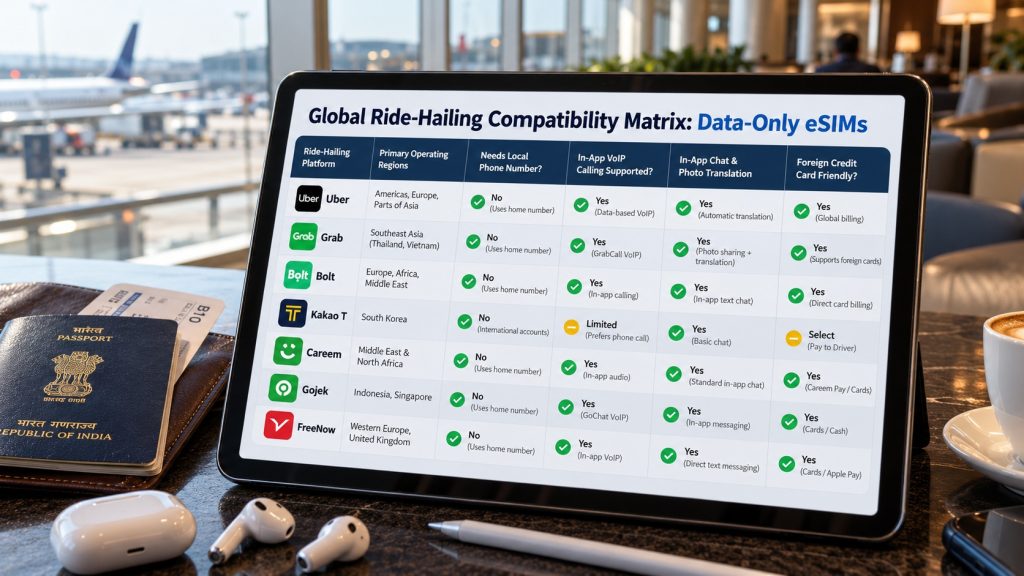
Different international transport applications enforce slightly different user policies depending on local governmental regulations. Fortunately, nearly every major regional platform operates smoothly over a dedicated mobile data connection.
The reference matrix below outlines operational compatibility across seven top global transport platforms. Review these operational parameters to prepare your mobile device for upcoming trips abroad.
Uber & FreeNow: Seamless Global Roaming with Existing Accounts
Travelers heading to North America or Western Europe can safely rely on their familiar Uber installation. You can use Uber abroad with eSIM data seamlessly without changing your account profile settings.
The software automatically detects your new location coordinates and displays local currency pricing immediately. Drivers reach you through high-definition VoIP calls and built-in text chat translation features.
Similarly, FreeNow operates smoothly across major European cities like London, Dublin, Madrid, and Berlin. It accepts Apple Pay, Google Pay, and international credit cards without prompting for local cellular verification.
Grab & Gojek: Southeast Asia’s Super-Apps on a Data Connection
If you travel to Thailand, Vietnam, or Malaysia, Grab serves as your primary everyday transport tool. You can comfortably use Grab without local phone number registrations by signing up with your home phone.
Grab features an exceptional communication tool called GrabCall, which routes voice calls purely over mobile data. Furthermore, the app provides real-time automated text translation and integrated camera photo messaging.
In Indonesia, Gojek provides identical functionality for hailing motorbike taxis, budget cars, and grocery deliveries. Both platforms accept international credit cards smoothly, eliminating the need to carry large stacks of physical cash.
Bolt & Careem: European and Middle Eastern Dual-SIM Workarounds
When visiting Central Europe, Southern Europe, or the Baltic states, Bolt often provides significantly cheaper rides than Uber. You can register your domestic home number and use the Bolt app data only eSIM setup easily.
Bolt supports clear in-app data calling, meaning drivers never struggle to connect with your handset. For travelers exploring the Middle East, Careem operates as the dominant regional transport super-application.
Careem works reliably across Dubai, Abu Dhabi, Riyadh, and Cairo over pure travel data connections. The app allows passengers to message drivers directly or place data calls with a single screen tap.
Kakao T: Navigating South Korea’s Unique Verification Gateways
Navigating transport in South Korea requires understanding local software regulations and domestic verification gateways. Kakao T serves as the nation’s premier taxi dispatching tool, but local credit cards usually dominate the payment system.
Fortunately, international visitors can register using their overseas phone number without needing an alien registration card. To bypass domestic Korean banking barriers, choose the “General Taxi” category and select “Pay to Driver”.
This setting lets you hail rides over travel data and pay the driver directly with physical credit cards. Alternatively, tourists can use Kakao’s dedicated k.ride application, which accepts foreign credit cards natively.
The Zero-Voice Airport Pickup Protocol: How to Coordinate Without Calling
Busy international airports represent high-stress environments where vehicle pickups become challenging quickly. Following our field-tested protocol guarantees you find your driver without exchanging a single spoken word.
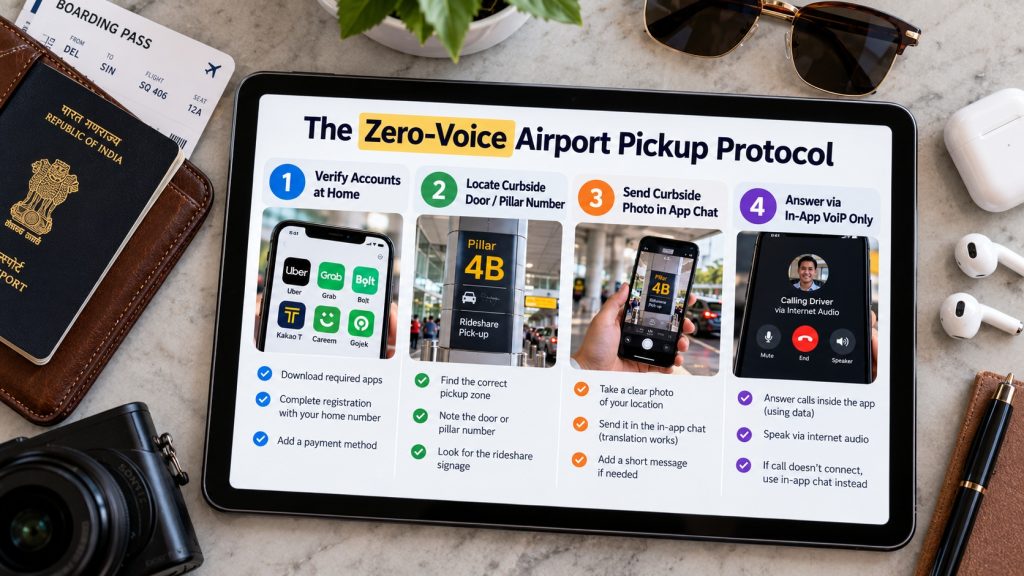
AIRPORT ZERO-VOICE PICKUP PROTOCOL:
Follow Departure Signs ➔ Locate Pillar Number ➔ Snap Photo in Chat ➔ Send Door Coordinates
Step 1: Pinning Exact Terminal Doors and Pillar Numbers
Never drop your location pin haphazardly while walking through the baggage claim concourse. Wait until you pass customs exit doors and step outside onto the active passenger pickup curb.
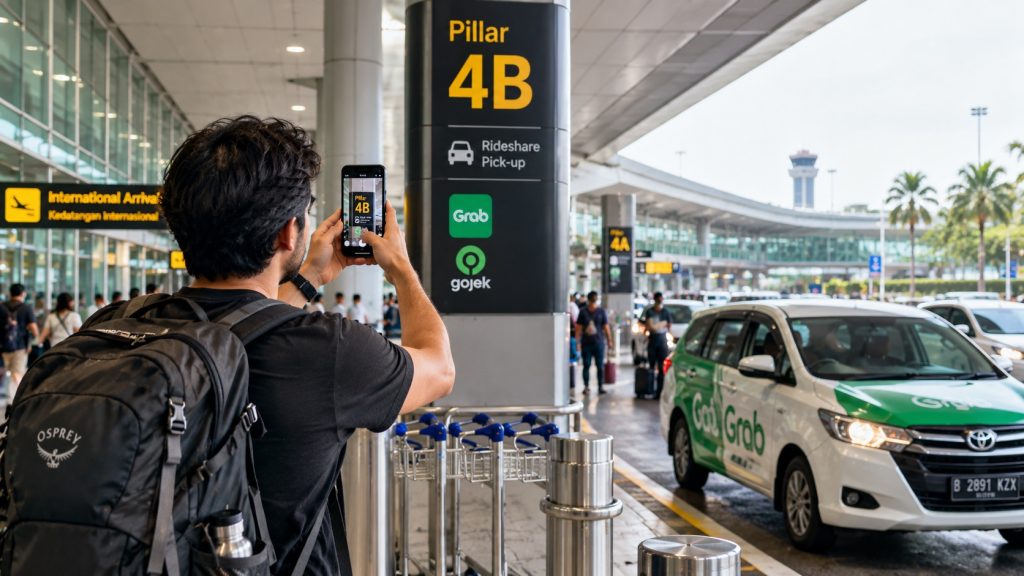
Look above your head or along the concrete passenger walkways for brightly painted architectural identifiers. Airports worldwide place large, visible numbers on curbside structural pillars (such as “Door 4” or “Pillar 12B”).
Enter that exact door number directly into the application’s pickup notes field before requesting your car. This precise placement directs the driver to your exact location, avoiding confusing airport traffic loops.
Step 2: Utilizing In-App Photo Sharing and Automated Translation Chat
Super-apps like Grab encourage travelers to use their smartphone camera directly inside the messaging window. Take a wide photograph showing your luggage, your clothing, and the nearest overhead pillar sign.
Send that image directly to your driver through the encrypted in-app messaging channel. If the driver responds in Thai, Vietnamese, or Arabic, tap the automatic translation button below the text.
The application instantly converts local phrases into clean English, allowing you to coordinate pickups comfortably. Visual cues eliminate language barriers entirely, outperforming noisy telephone calls across crowded airport passenger lanes.
Step 3: What to Do When a Driver Attempts a Cellular Circuit Call
Occasionally, an older driver might try dialing your registered telephone digits using regular carrier circuits. Because your data profile lacks voice channels, your phone will not ring.
Do not panic if you spot an unanswered call notification inside your ride dashboard. Immediately open your application messaging window and send a short, polite pre-written message.
Type: “Hello! I am standing right under Pillar 4 wearing a black jacket. Please message me here.” Drivers monitor their dashboard screens constantly and will follow text instructions to pull up safely.
International Payment Setups: Preventing Foreign Credit Card Declines
Nothing creates more airport stress than watching your ride request fail due to declined payment authorizations. Financial institutions enforce strict fraud detection systems that flag sudden overseas transactions.
Properly configuring your payment profiles before departing home ensures effortless bookings worldwide. Take a few moments to verify your banking settings before leaving for your trip.
Binding Travel Credit Cards to Avoid OTP Traps Overseas
Before packing your suitcases, open every ride-hailing application you intend to use abroad. Manually add your preferred international travel credit cards directly into the account payment wallets.
Your home bank will likely trigger a 3D Secure verification text during this initial binding step. Completing this card verification at home allows you to authorize the payment card easily.
Once verified inside your domestic network, the ride application saves your authorized payment token securely. When you land abroad, the service charges your card automatically without demanding further security codes.
When and Where to Keep Cash as a Secondary Backup
While digital payments dominate modern travel, keeping small local cash bills remains a smart travel strategy. Certain regional taxi services and small rural drivers occasionally struggle with malfunctioning mobile card readers.
Furthermore, applications like Kakao T frequently require tourists to pay vehicle operators directly upon arrival. Exchange a modest sum of local currency at airport bank kiosks immediately after clearing customs.
Carrying small banknote denominations ensures you can settle metered fares quickly if card systems fail. This simple financial backup ensures you reach your hotel safely regardless of localized banking glitches.
Frequently Asked Questions (FAQs)
Yes, you can use Uber internationally with complete confidence using a data-only travel profile. The platform relies on your existing account credentials and connects all vehicle requests through active mobile internet. Drivers communicate with you directly using high-definition in-app VoIP audio calls or instant text messaging.
No, Grab does not require you to hold a local Southeast Asian telephone number. You can create and verify your account using your standard domestic home number before departure. The application operates smoothly over travel data, providing access to GrabCall and built-in photo messaging.
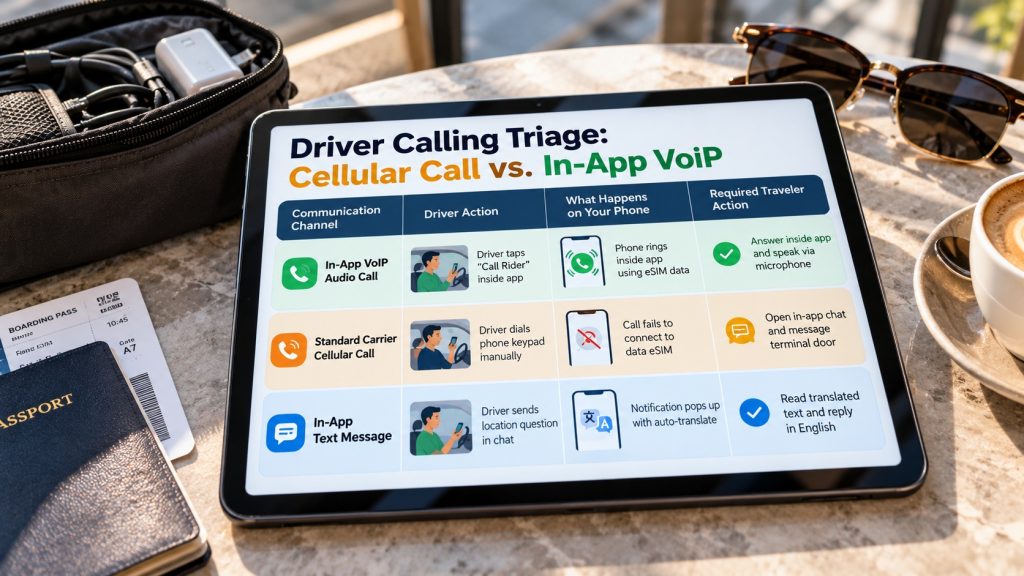
If the driver dials via the app’s VoIP calling feature, your phone rings normally over your data connection. If the driver dials your number through regular carrier lines, the call will fail to connect. Simply open your in-app chat and send your exact pickup door or terminal pillar number.
Ride-hailing applications send a mandatory one-time SMS verification code during the initial account creation process. If you wait until landing overseas, you might struggle to receive this text without expensive roaming fees. Setting up accounts at home ensures everything works smoothly the moment your airplane touches down.
Yes, international travelers can register for Kakao T using their overseas telephone number. When booking, select the “General Taxi” category and choose the “Pay to Driver” option. This lets you bypass local Korean payment barriers and settle fares directly with cash or credit cards.
You May Like Reading Similar Blogs
Does Travel eSIM Support Wi-Fi Calling? How to Check Your Phone
eSIM Hotspot Not Working? How to Fix Tethering on iOS and Android Abroad
eSIM for the First Time: A Complete Beginner’s Step-by-Step Setup Guide
How to Turn Off ‘Allow Mobile Data Switching’ to Stop Surprise Carrier Roaming Bills
Why Does My eSIM Have Full Signal Bars but No Internet? 7 Underlying Fixes
Is Your Phone eSIM Compatible? Check in 60 Seconds
Never Delete Your Travel eSIM: What Happens When You Tap ‘Delete eSIM’ & How to Recover
eSIM vs Pocket WiFi vs International Roaming: Which Is Best for Your Trip in 2026?
Day Pass, Unlimited or Fixed Data eSIM: Which Plan Is Best for Your Trip?
How to Keep Your WhatsApp Number Active While Using a Travel eSIM
Should I Install My eSIM Before Travel or After Landing? The Complete Answer
eSIM for Short Layovers and Airport Transit: Do You Really Need Data for 2–6 Hours?
Best eSIM, Physical SIM for Southeast Asia: Nepal, Sri Lanka, Philippines, Bali Compared
eSIM for Digital Nomads and Remote Workers: The Complete Connectivity Setup in 2026
eSIM Security and Privacy: Is Your Data Safe When Traveling?
Subscribe to our YouTube channel and follow us on Instagram for more updates.
Leave a comment